The marine layer, which holds a June morning near 60 degrees and delays the stamping window by hours, and back yards laid out in the 1950s at 40 to 50 feet across, which decide what pattern reads.
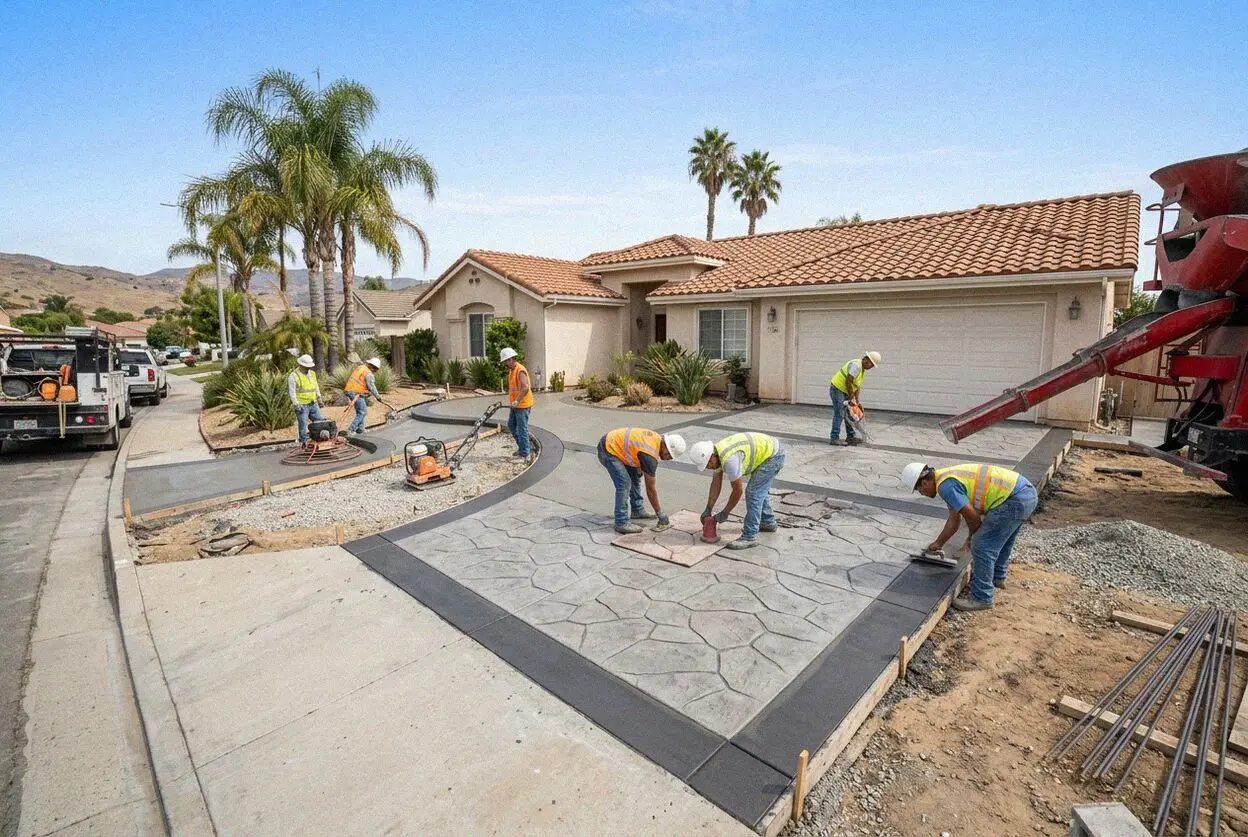
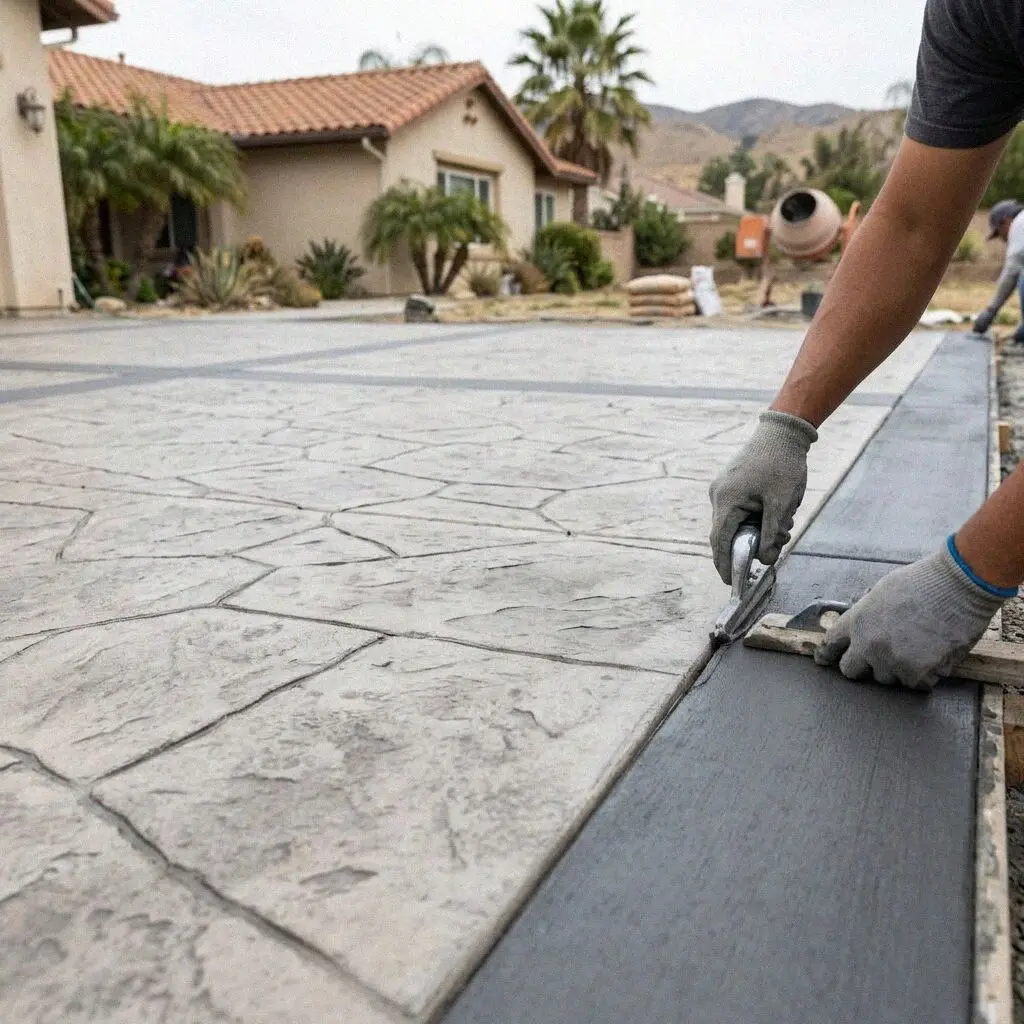
From May into July the cloud sits on the plain until noon most days, and concrete poured at seven is still soft at eleven. Then the sun comes through, the surface dries from the top, and the last third of the slab can be ready before the first third is finished. So the crew pours early, stamps from where the truck first discharged, and keeps two people on the mats and one on the hardener throughout. A patio off Sepulveda Boulevard is nearly always one pour, which keeps the color even.
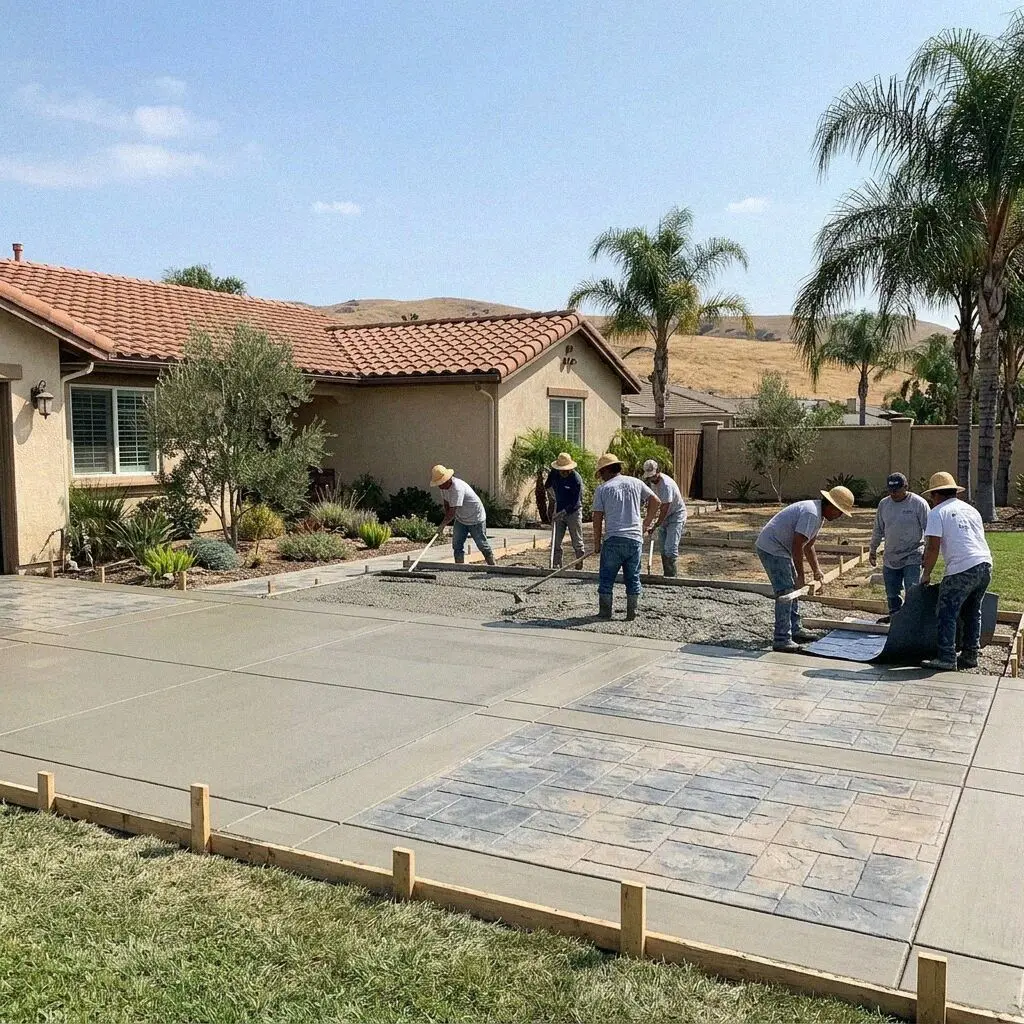
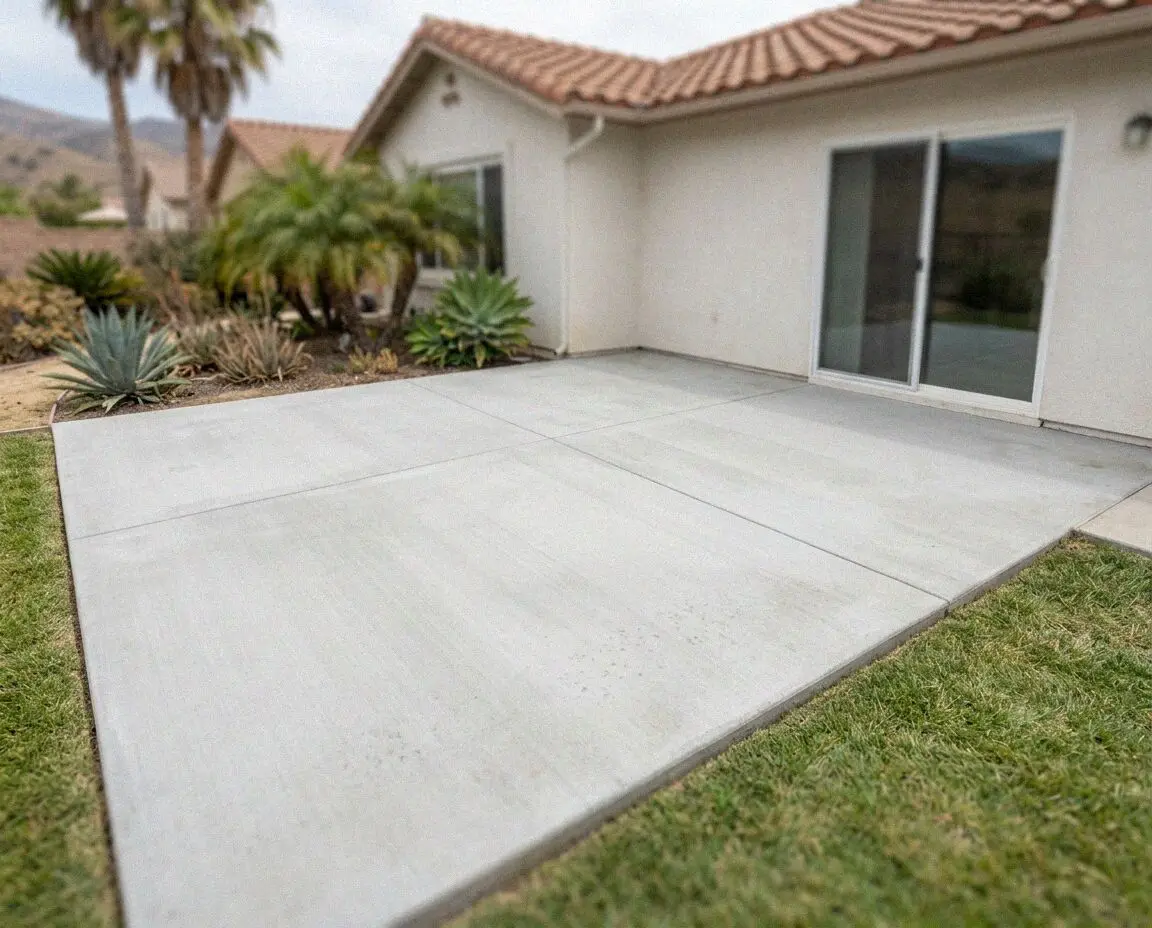
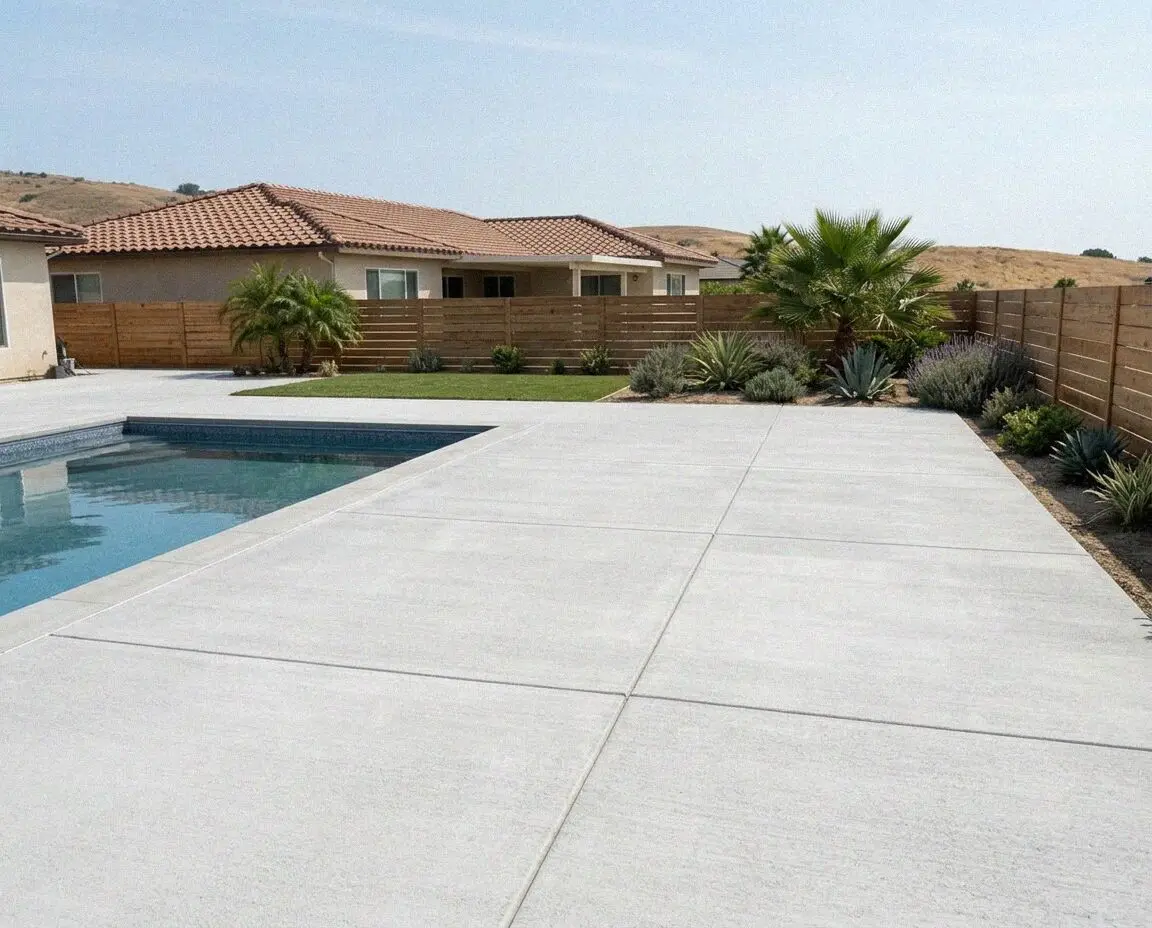
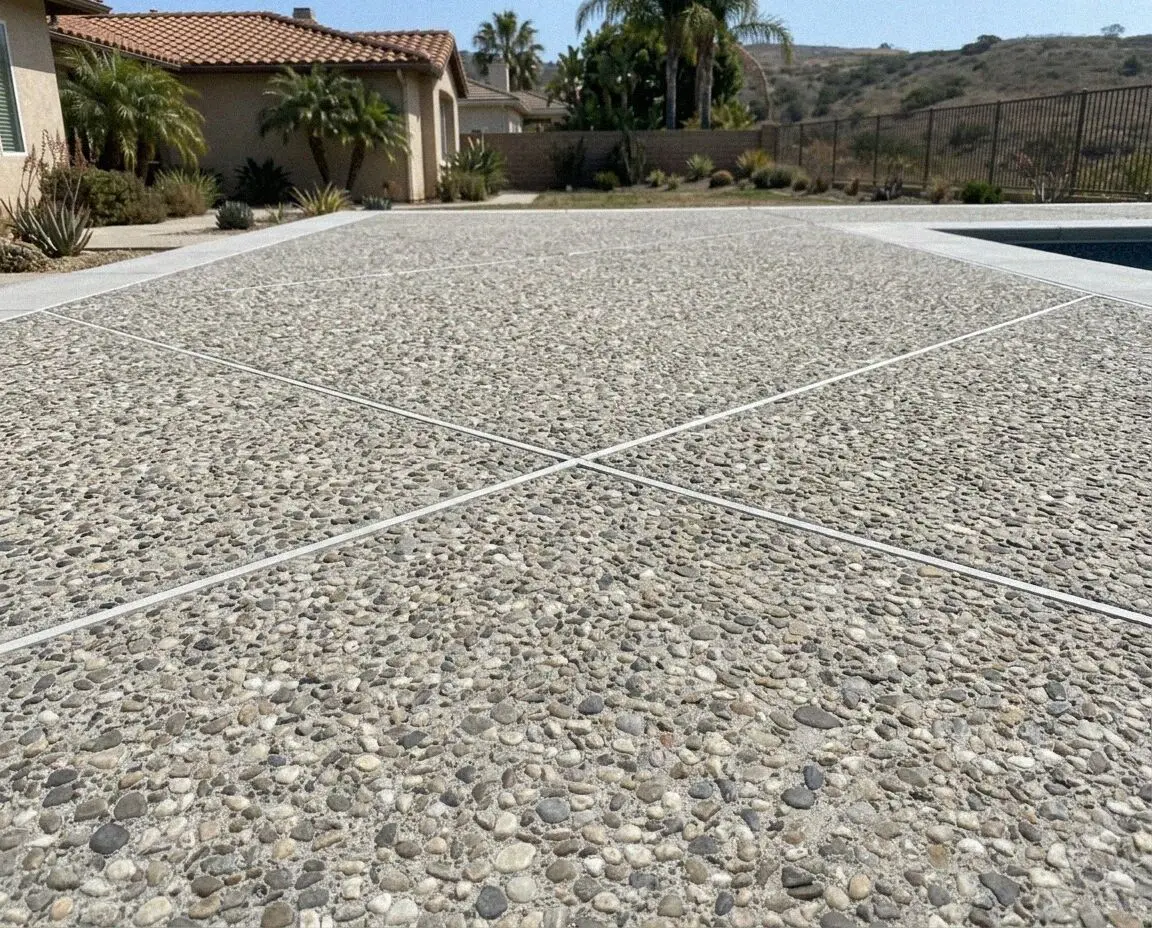
The yard is the other thing. The tracts of West Torrance and Southwood have back yards of 40 to 50 feet, and at that size a large flagstone reads as four stones and a wall, so the pattern is chosen against the width of the yard, not from a catalog. On the Riviera the slab goes down over clay, cut out and replaced with base, with joints sawn closer. Nearer Torrance Beach the sealer matters most, because salt reaches the surface each morning. A plain patio is the other way to pour it.