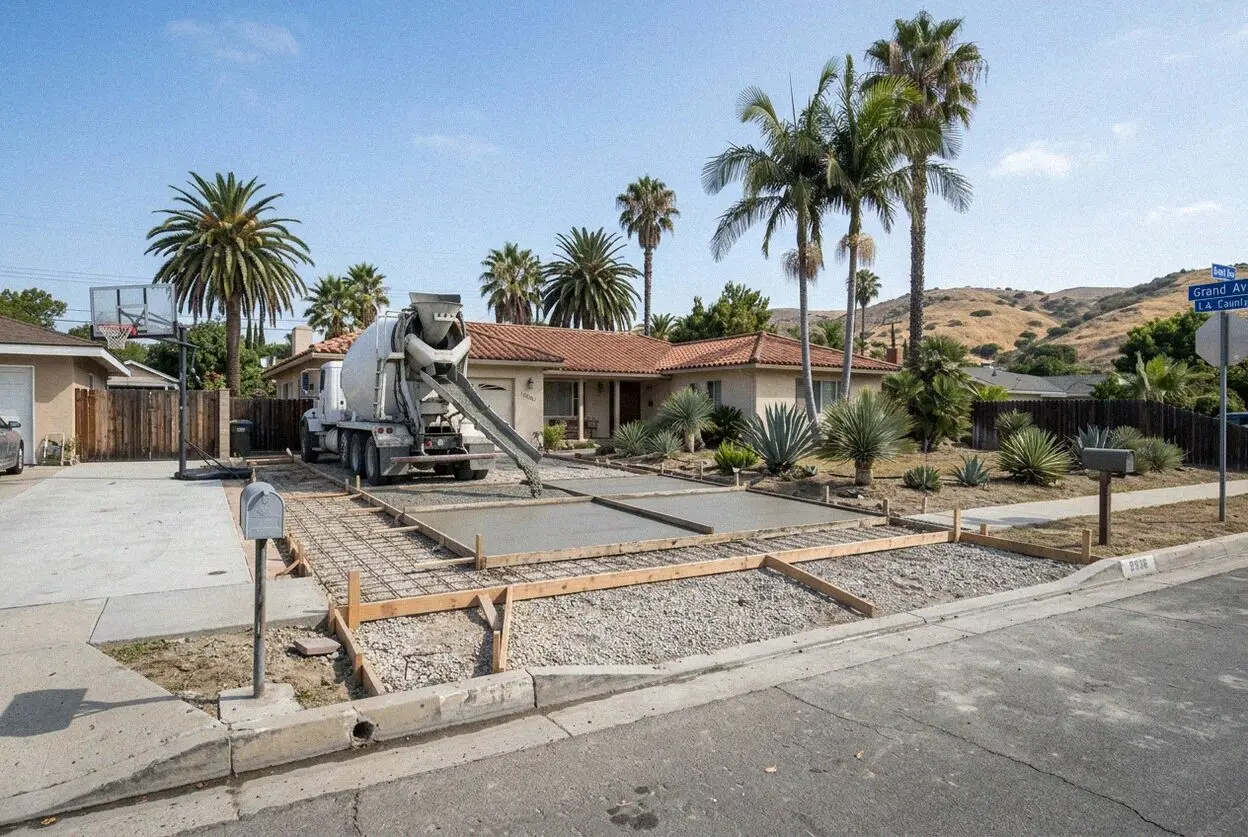
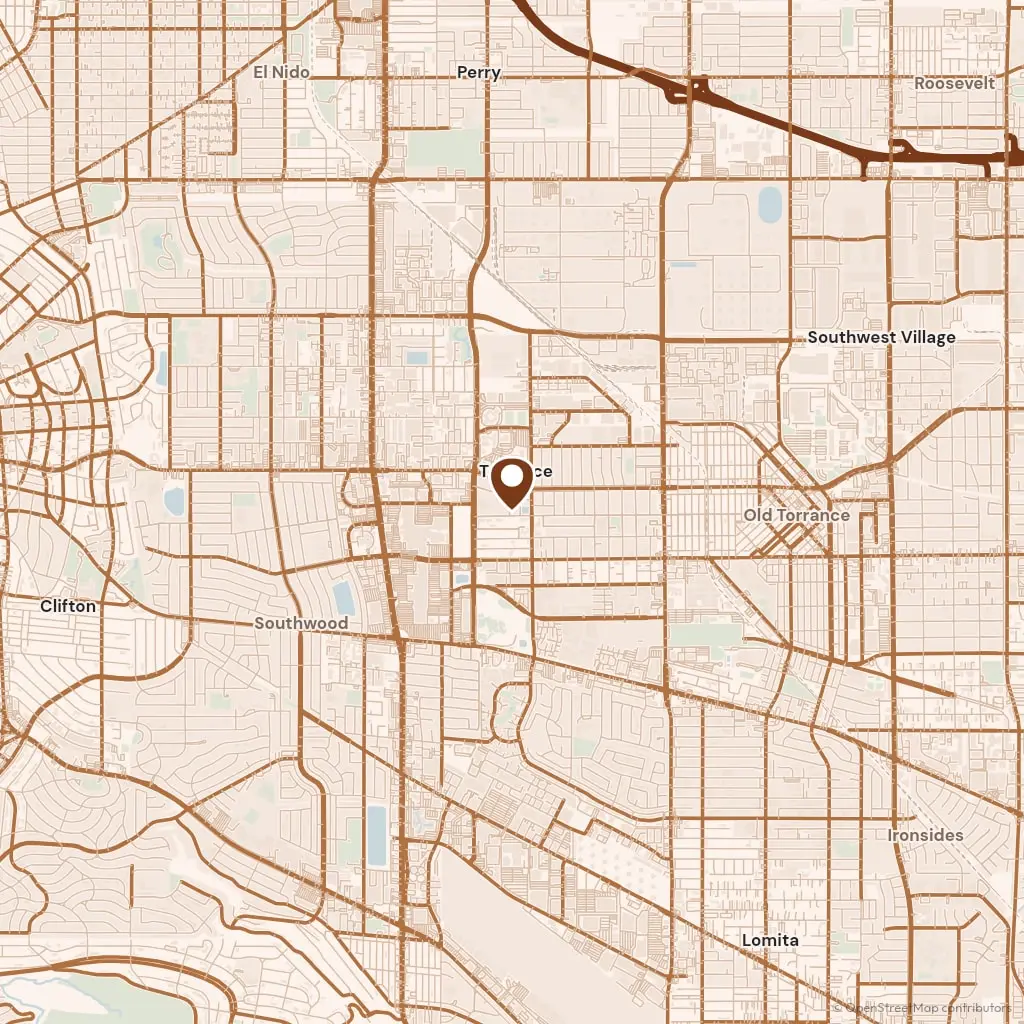
The drive from our office on Hawthorne Boulevard is about 9 miles up Sepulveda Boulevard, past the Manhattan Beach line and into El Segundo at Rosecrans, with no freeway, so the crew is on site in half an hour and a truck from the plant follows the same road. Permits go to the City of El Segundo's Planning and Building Safety Department at City Hall on Main Street, and a curb cut or a walk panel is inspected before the pour. We file it and meet the inspector.
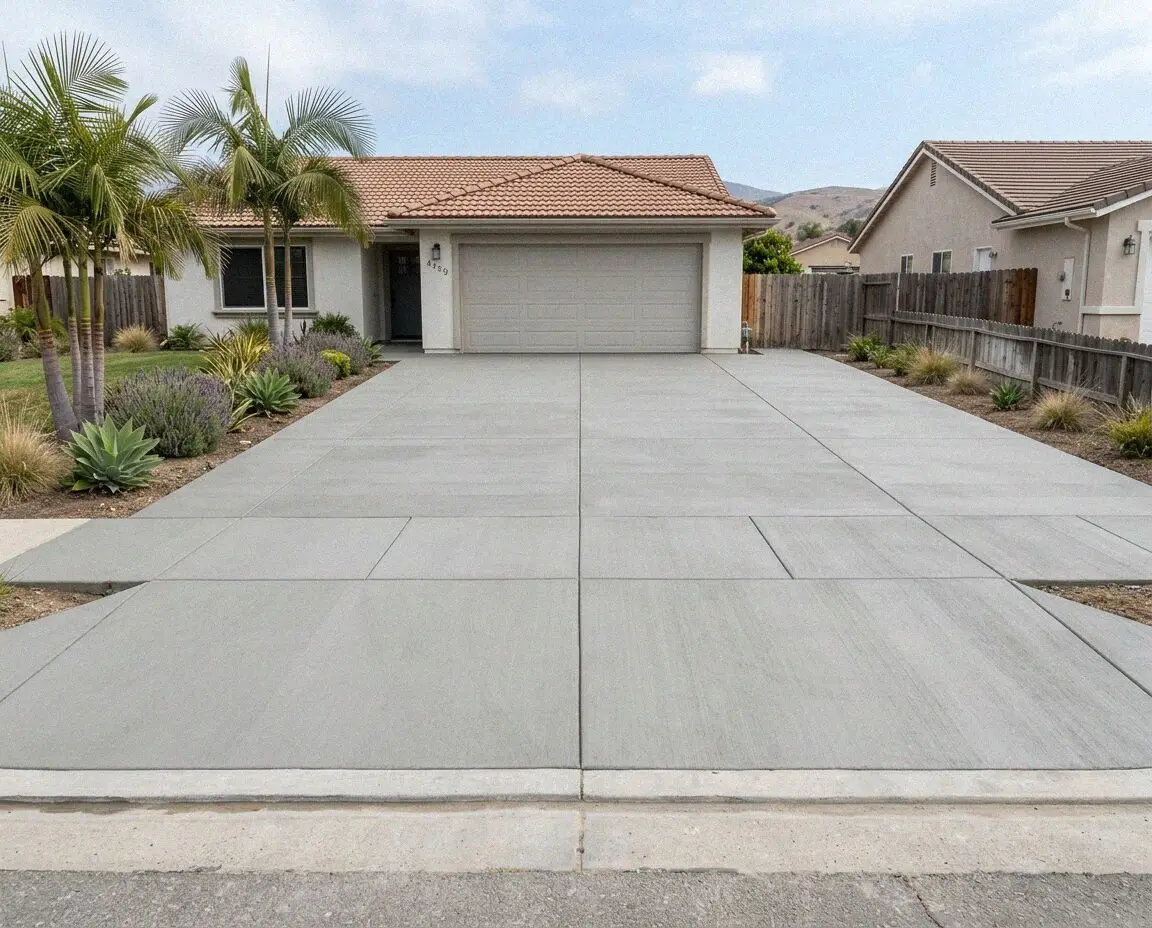
The houses sit between the Chevron refinery on the south and the airport on the north, west of Sepulveda Boulevard, in a grid that began in the 1910s when the refinery opened and filled through the 1940s and 1950s with the aerospace plants across Sepulveda. Off Main Street and Richmond Street the bungalows are 1920s on 40 foot lots, and toward Grand Avenue they are postwar. Many are now two-story rebuilds, and the drive and garage slab that come with a rebuild are our usual job here.
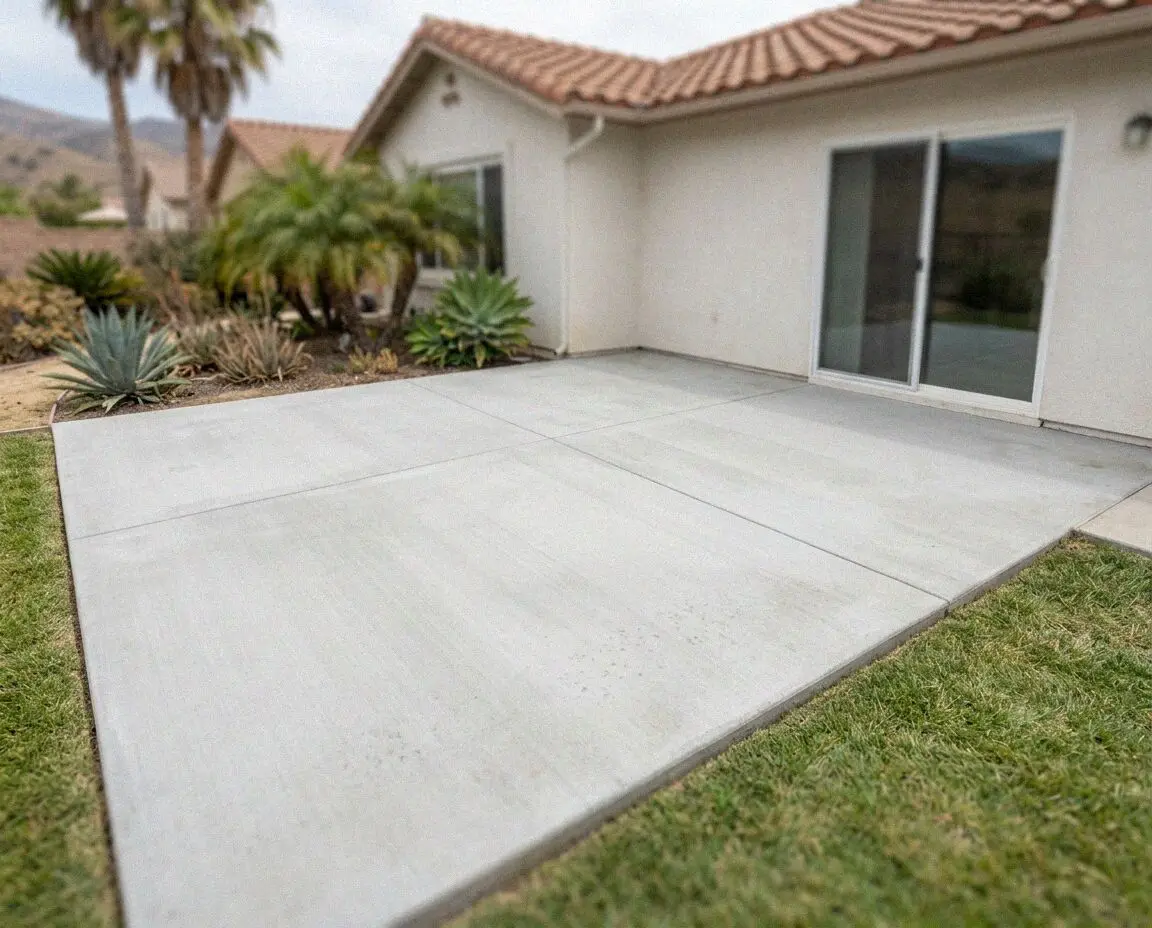
Everything here faces the weather. The marine layer sits on the town through June and the wind off the water runs all afternoon, so a slab loses water from its surface faster than the thermometer says and we keep every pour wet for a week. Salt travels on that wind, so the bar gets more cover and the surface gets a sealer at 28 days. The one thing the coast gives back is the sand, which drains so well that a patio set to fall away from the house has nowhere to hold a puddle.