Concrete Driveway Building
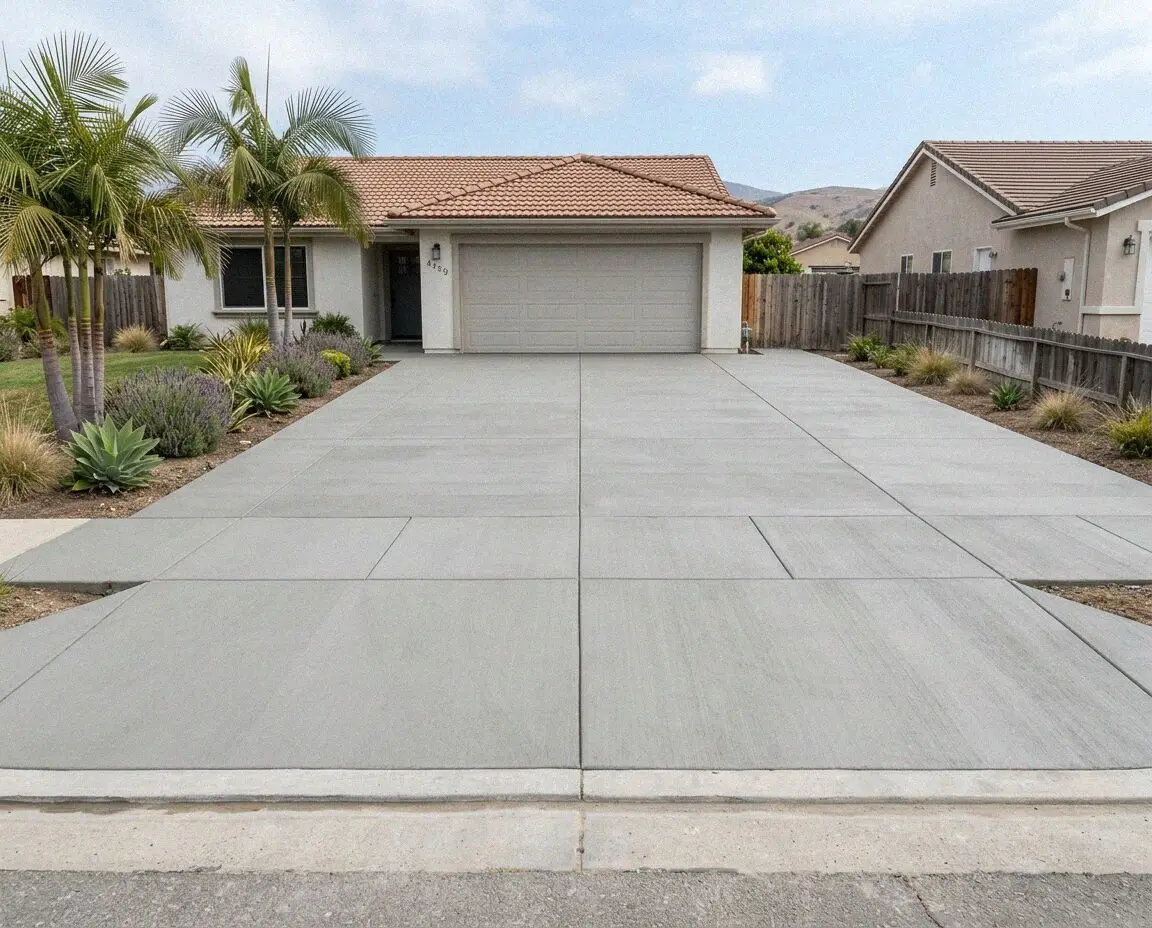
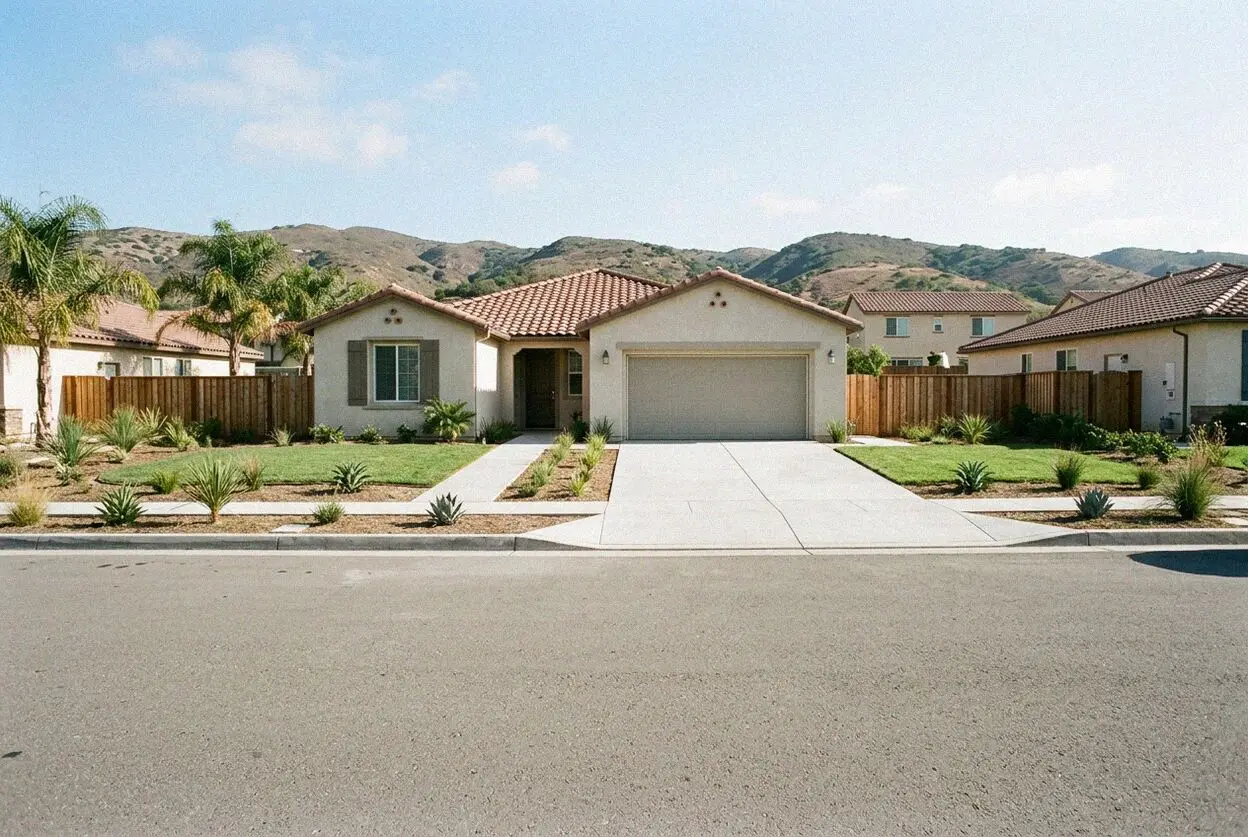
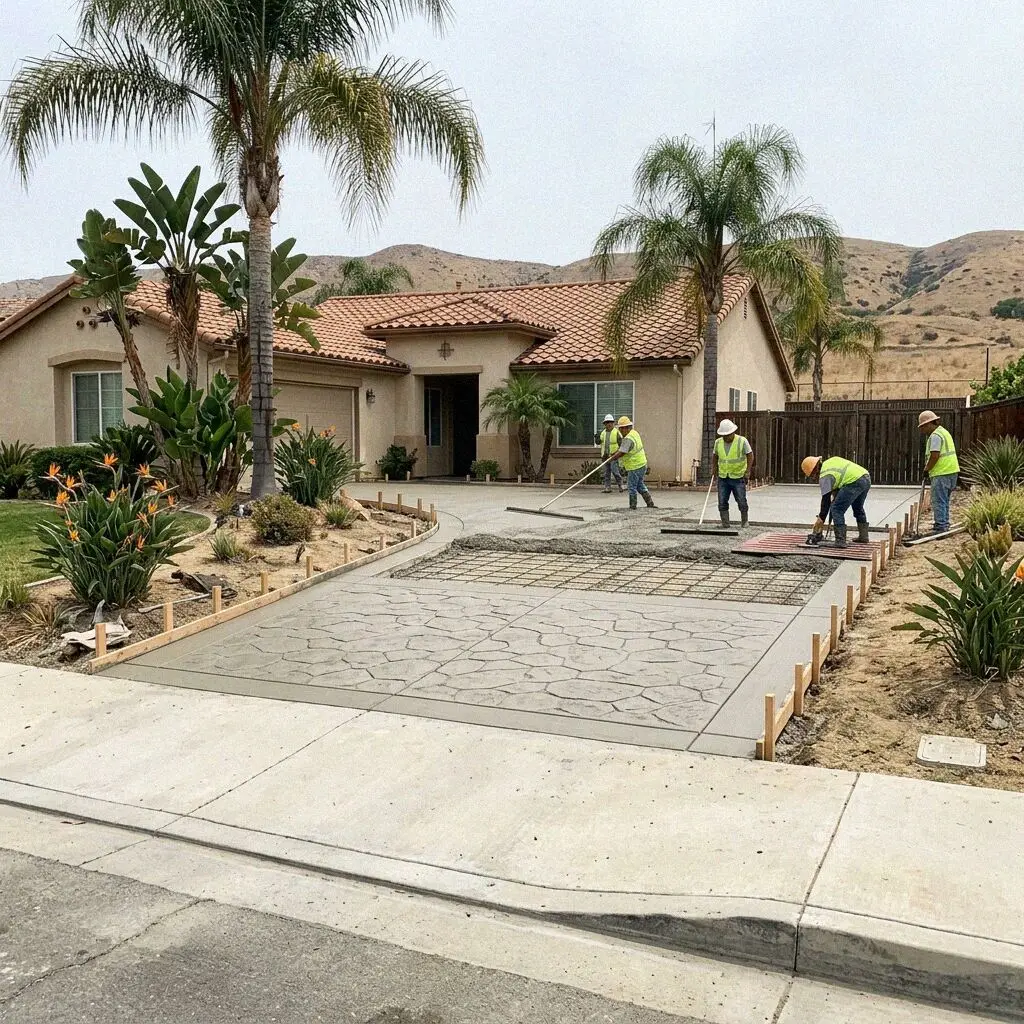
A drive built with the fall the tract builder left out, dug to firm ground at the garage end and doweled to the apron where it cracks first.

Driveways, garage floors, slab foundations and patios for the South Bay, from Old Torrance to the Riviera. Call for a free estimate. We measure at the property and hand you the written figure before we leave.


 5.0 Stars Rated by our customers · Google, Facebook and the BBB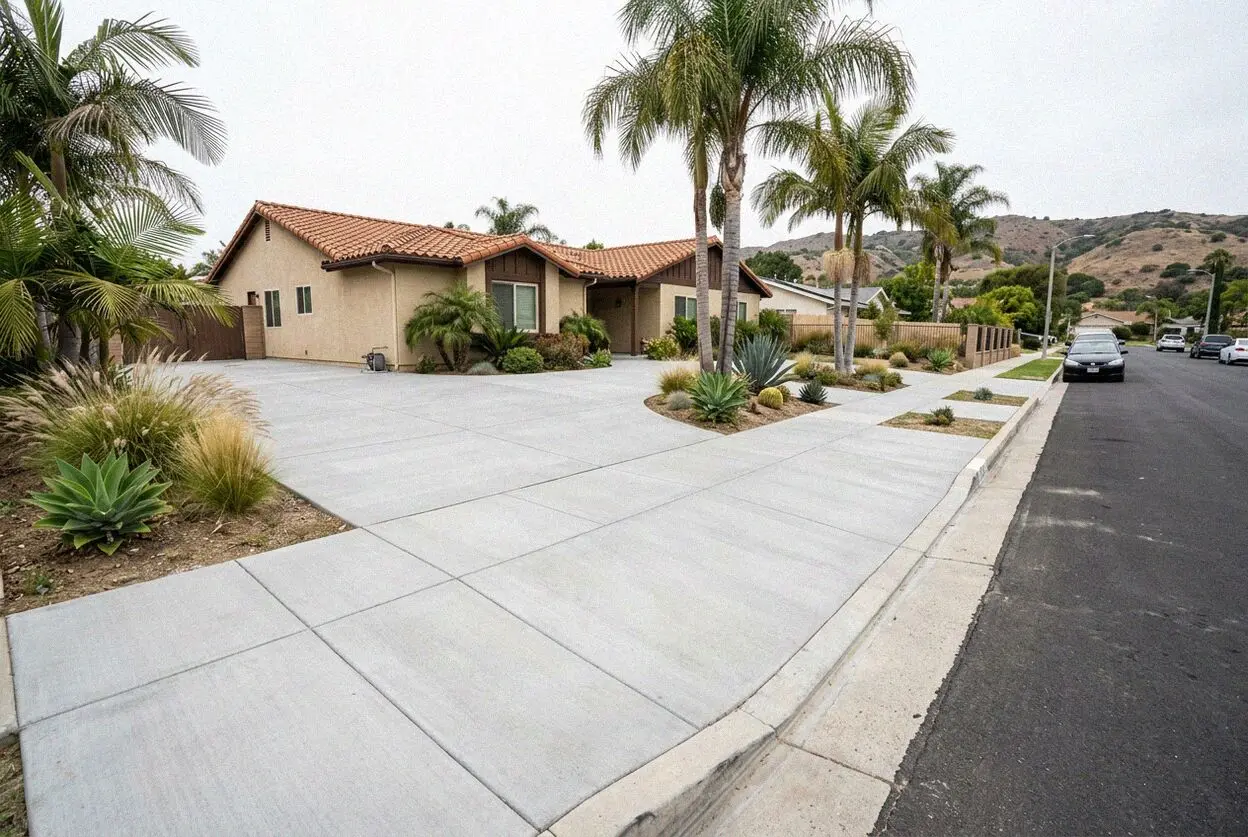
Every concrete service the trade offers, poured by one crew. A garage floor ground out and re-poured, a slab for an ADU behind a Southwood house or a cracked apron replaced at the street, the same people do the demolition, the base and the finish, and Hawthorne Torrance Concrete answers for all of it.
A drive built with the fall the tract builder left out, dug to firm ground at the garage end and doweled to the apron where it cracks first.
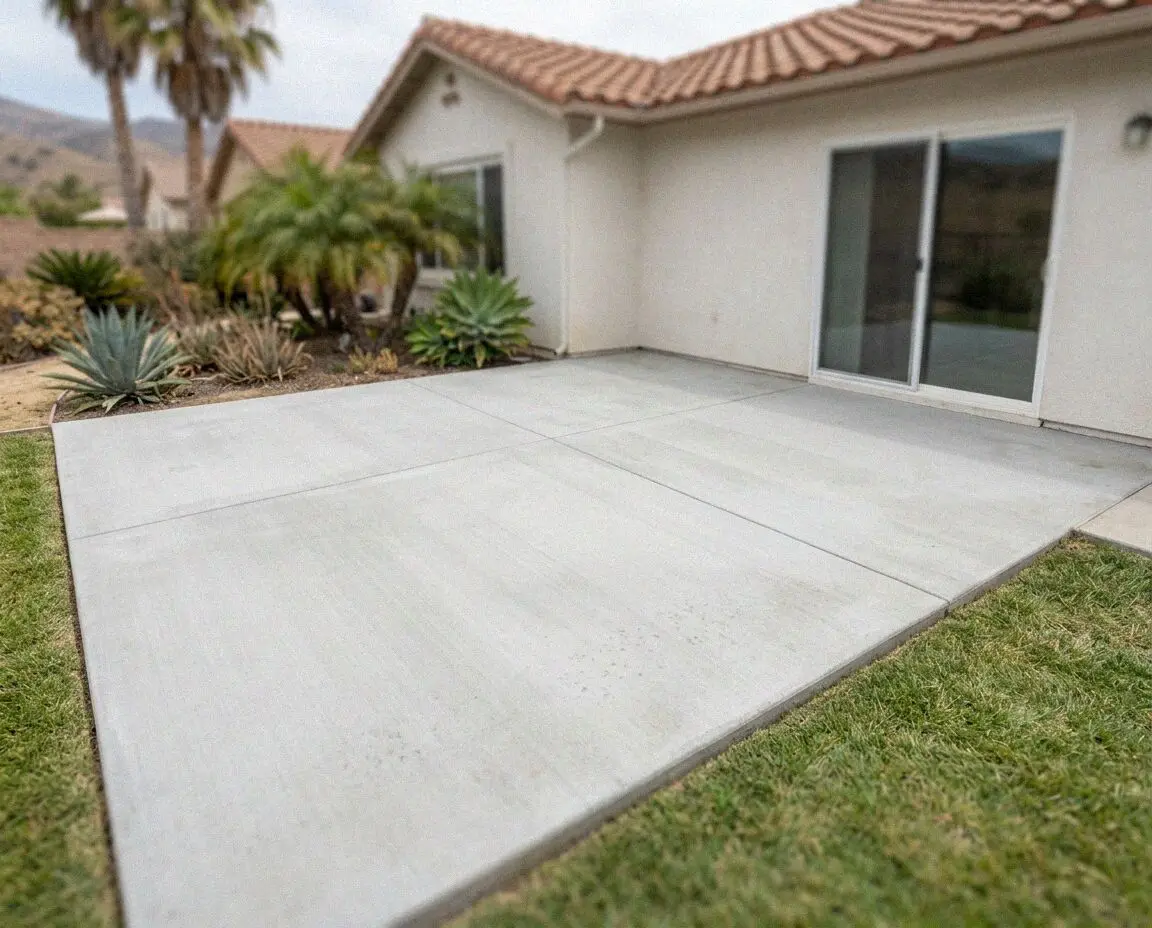
A patio finished when the slab is ready under the marine layer, textured to grip when damp, held below the sill and graded to the lawn.
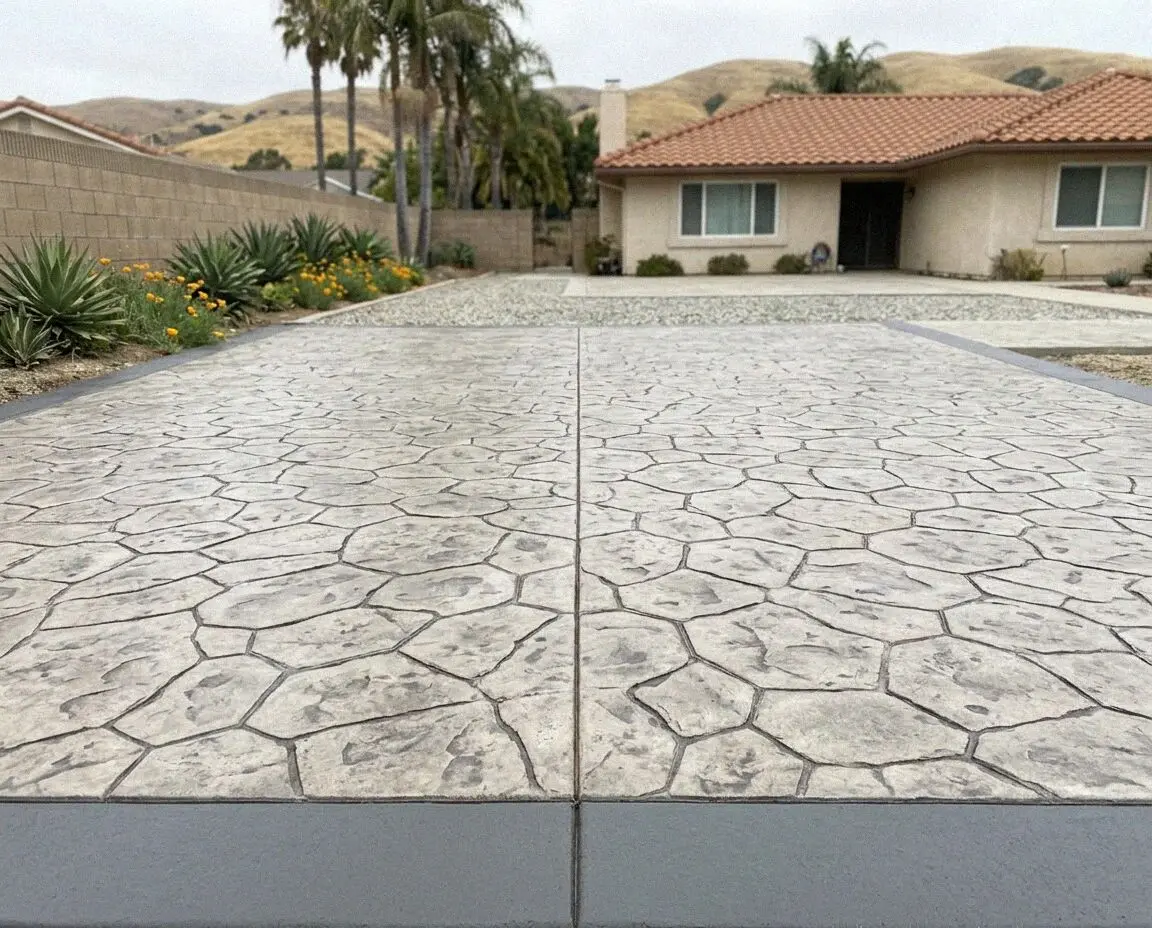
A patio, walk or pool surround stamped in stone, slate or plank, colored through, pressed when the slab is ready and sealed once it is dry.
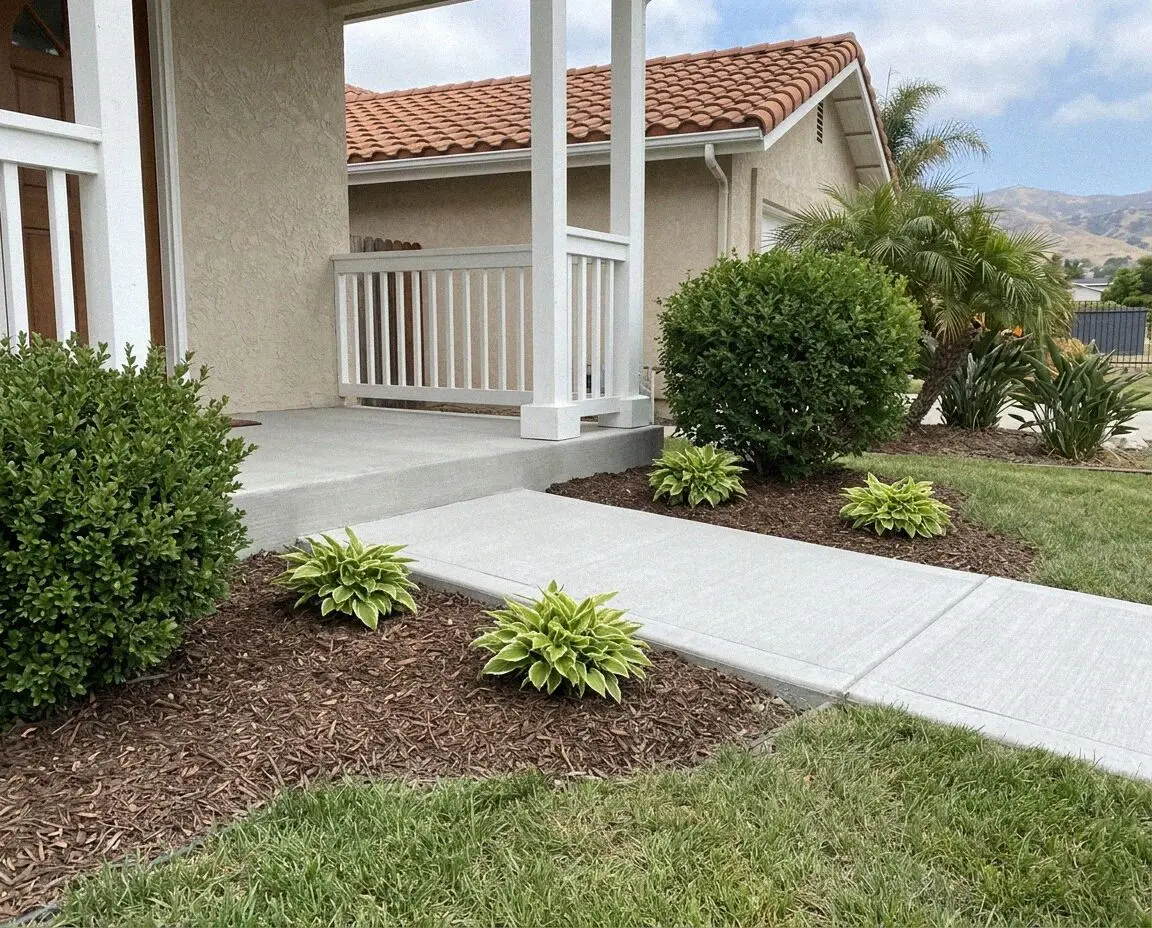
A front, side or public walk poured 4 inches thick on compacted base, with the fall set on the forms so a level Torrance lot still drains it.
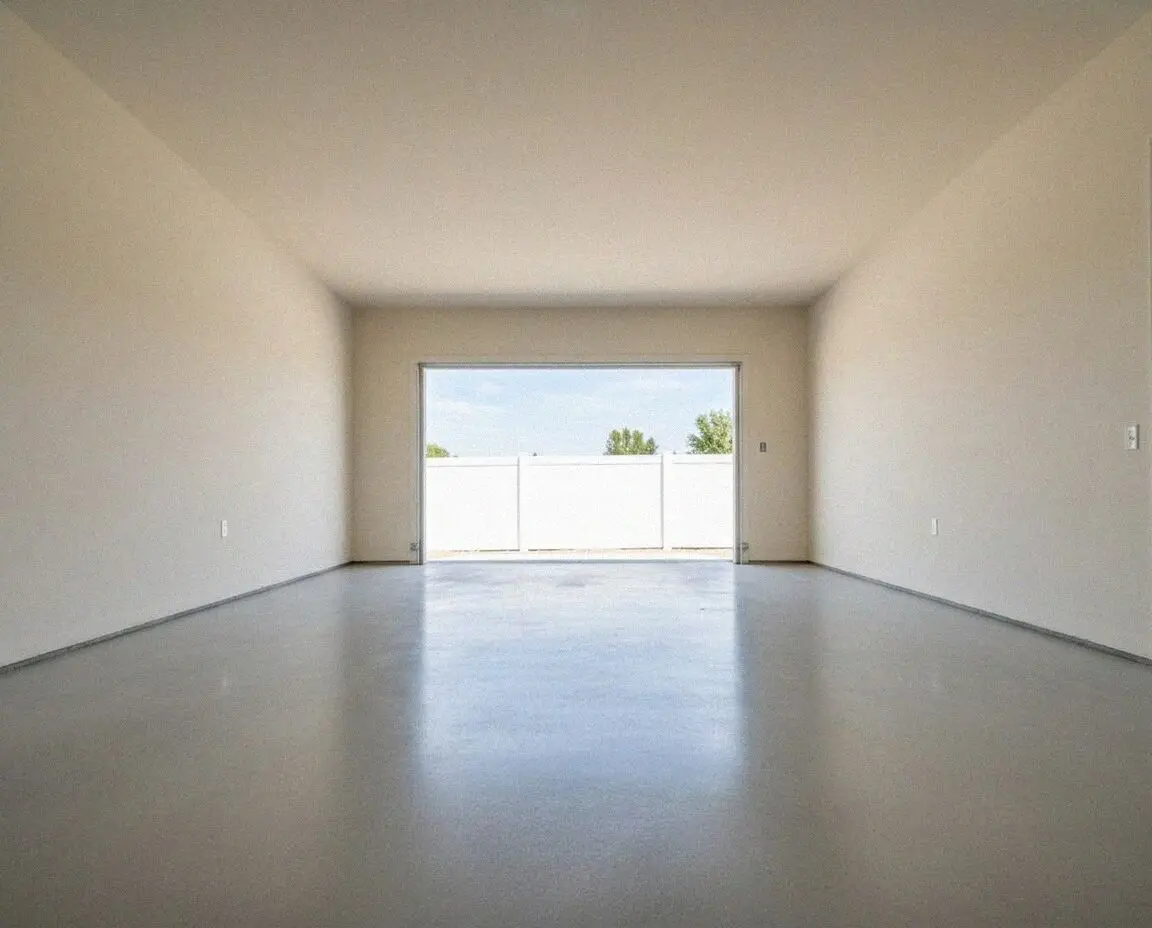
A bay floor cut free of the old footing and poured back with a fall to the door, sheeted, troweled tight and sealed, so a wet car drains out.
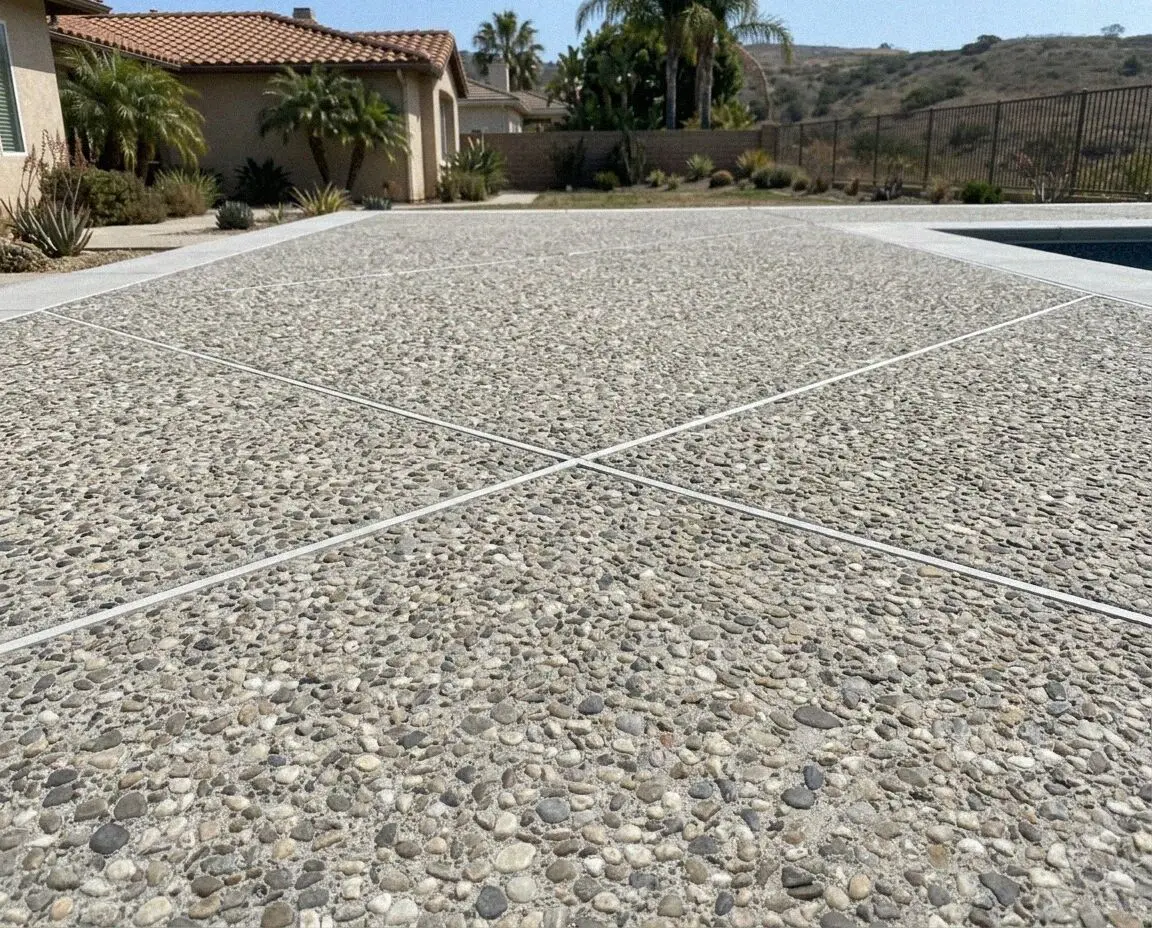
Exposed aggregate, stamped or colored concrete, finished to the marine layer's clock and sealed on a dry afternoon, so both ends match.
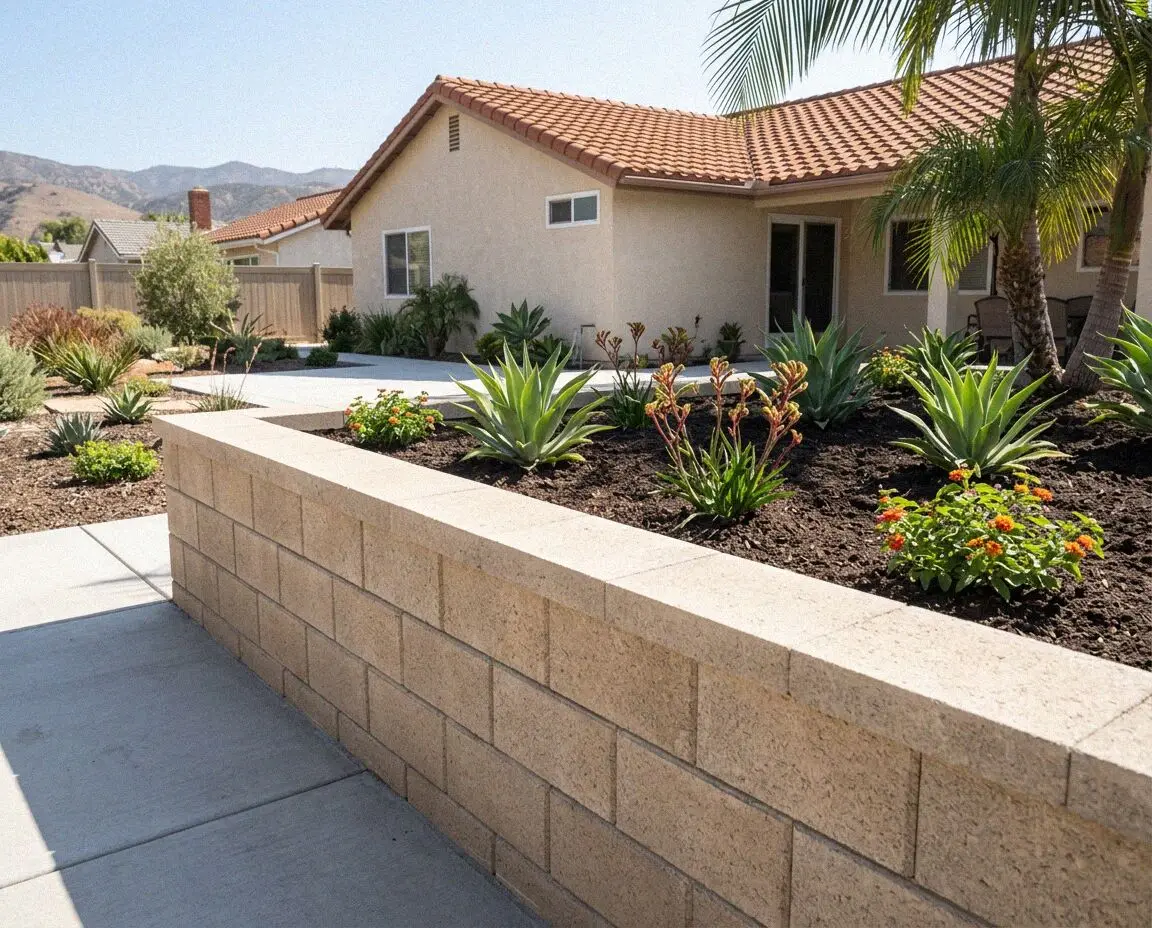
A wall built for the lot it stands on, dug to firm clay, drained to daylight, and carried in by hand where the terraces leave no other way.
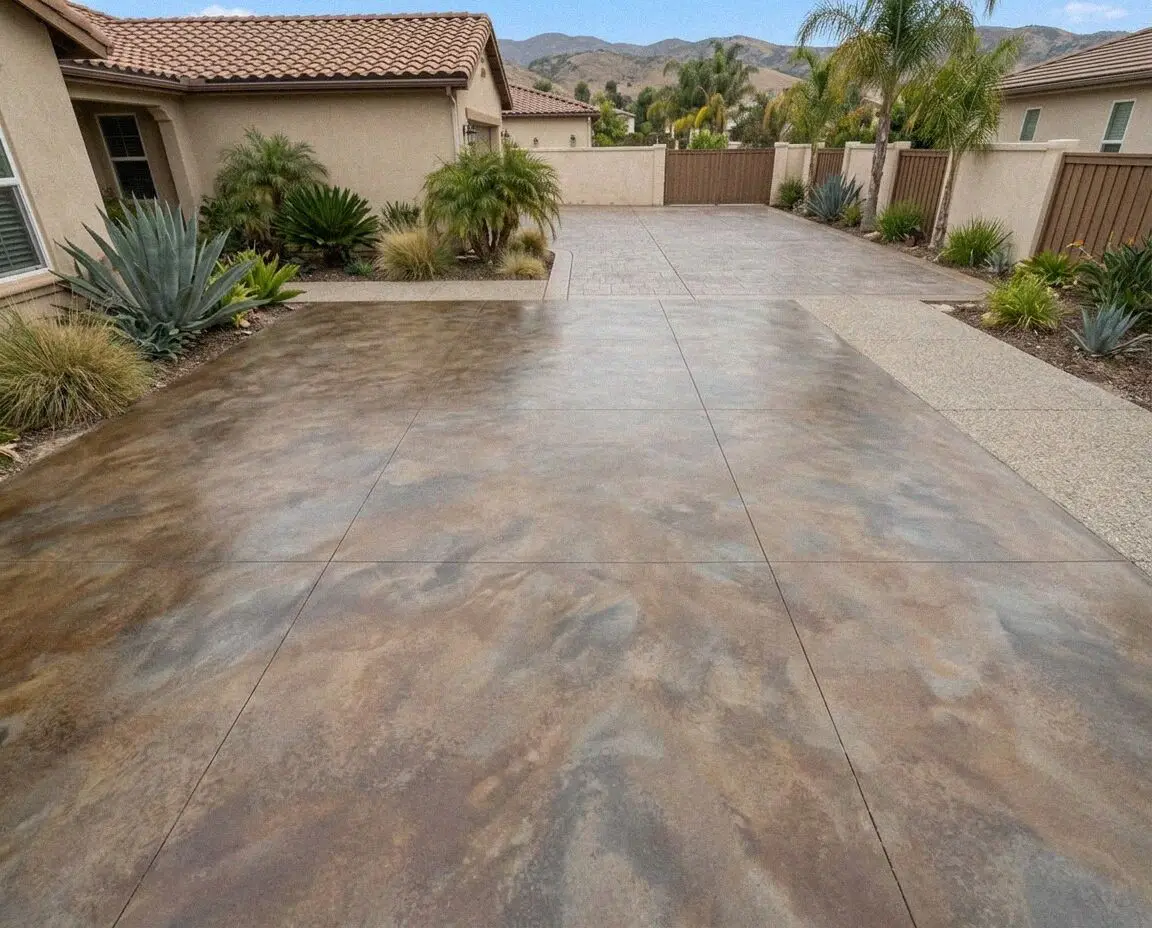
An interior floor poured on rock and a vapor retarder, thickened where a machine or a lift will stand, and checked flat under a straightedge.
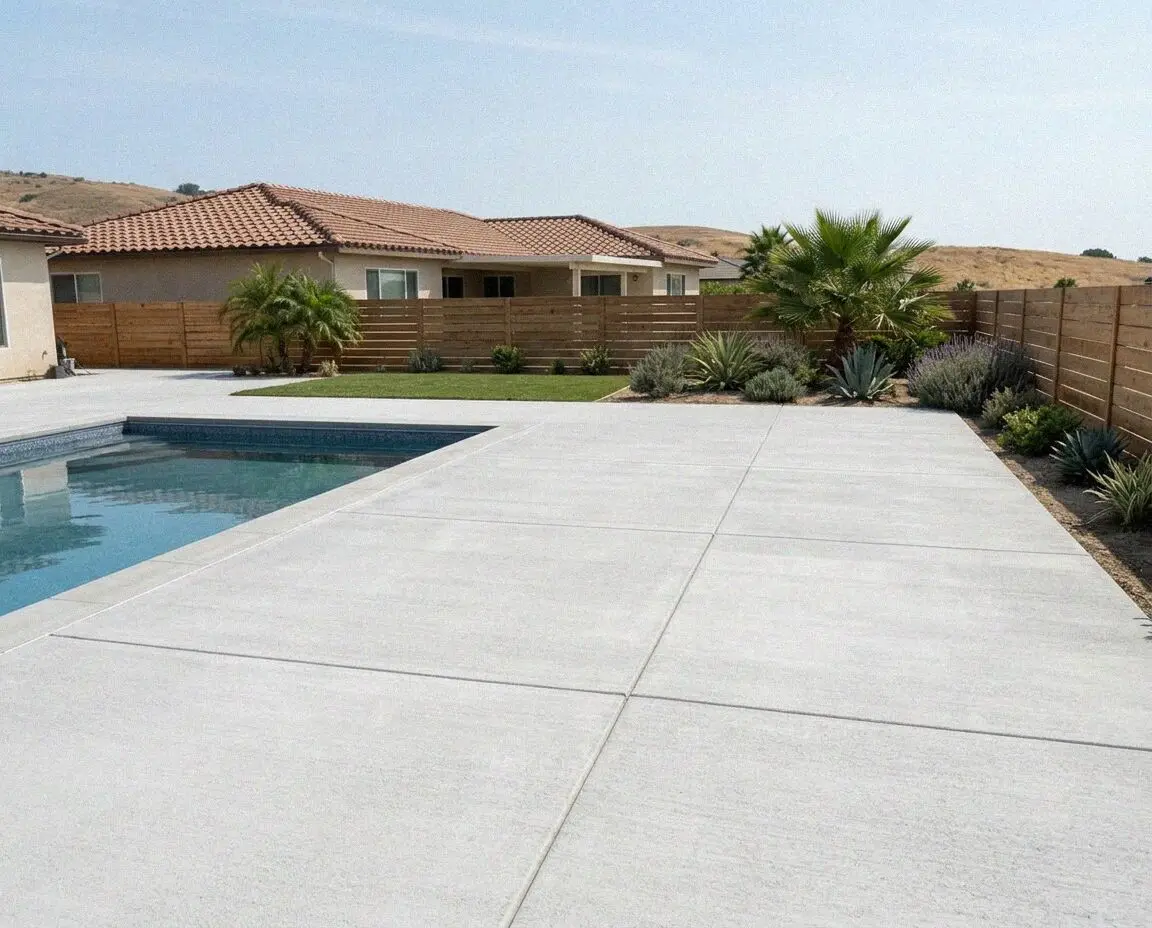
The deck around an older pool taken out to the bond beam and poured again at 4 inches, falling away from the water, the coping joint sealed.
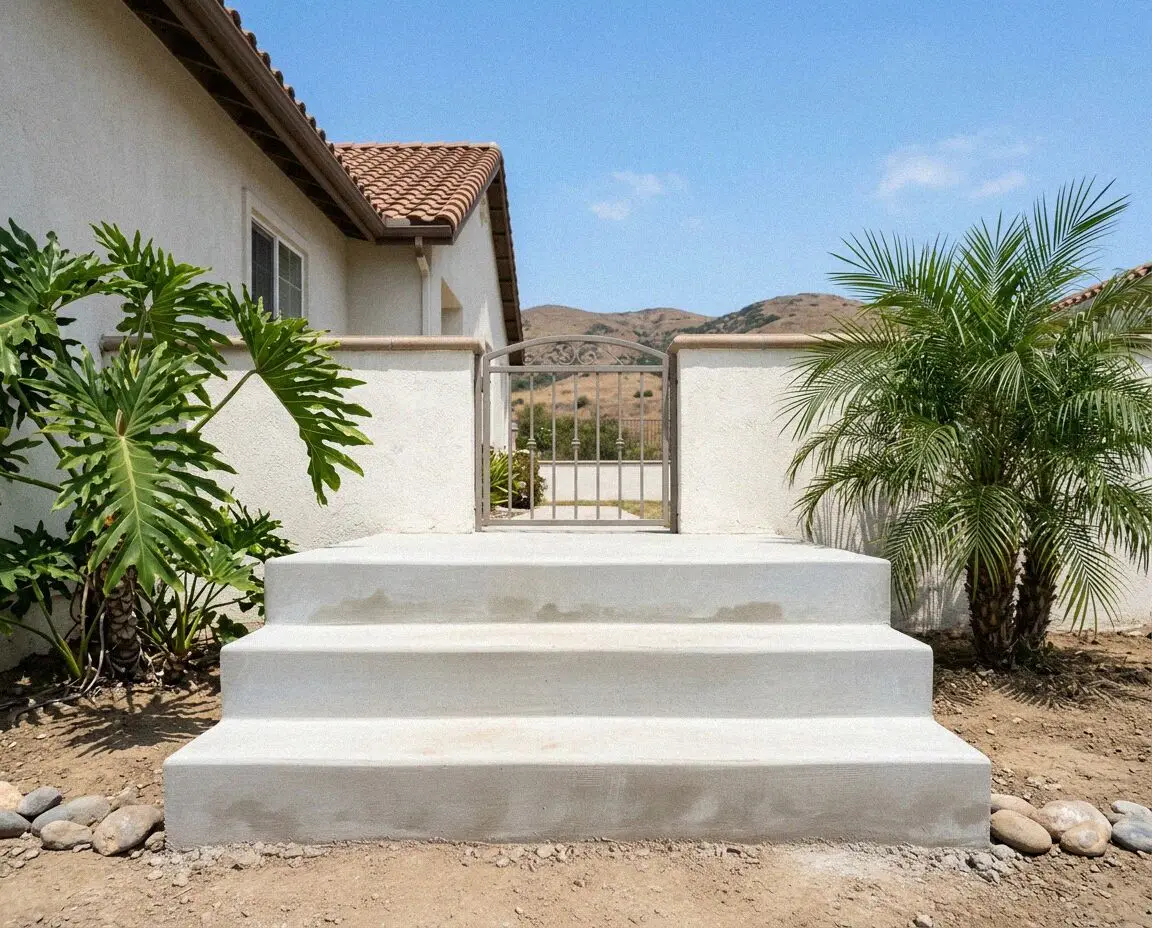
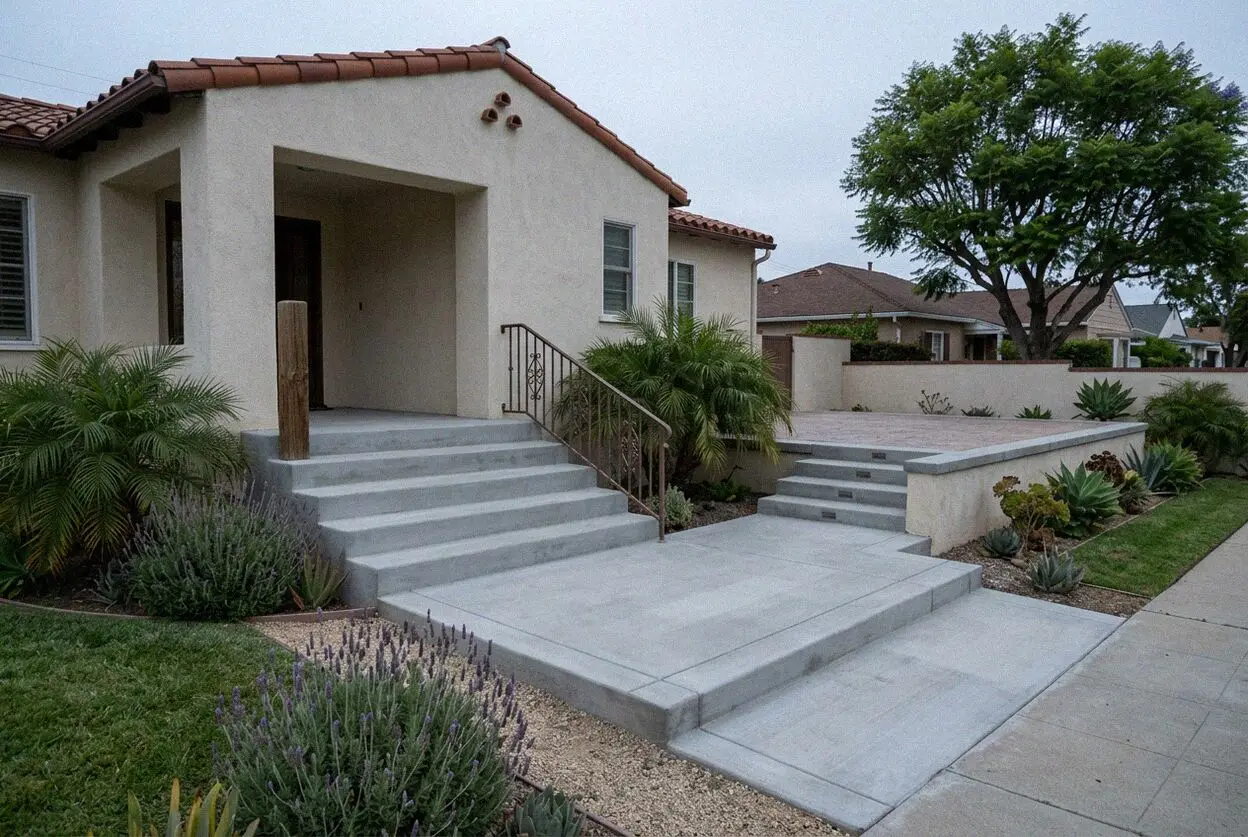
Steps to a door poured solid on a footing and doweled to the house, every riser 7 inches, a landing at the sill and a sleeve for the rail.
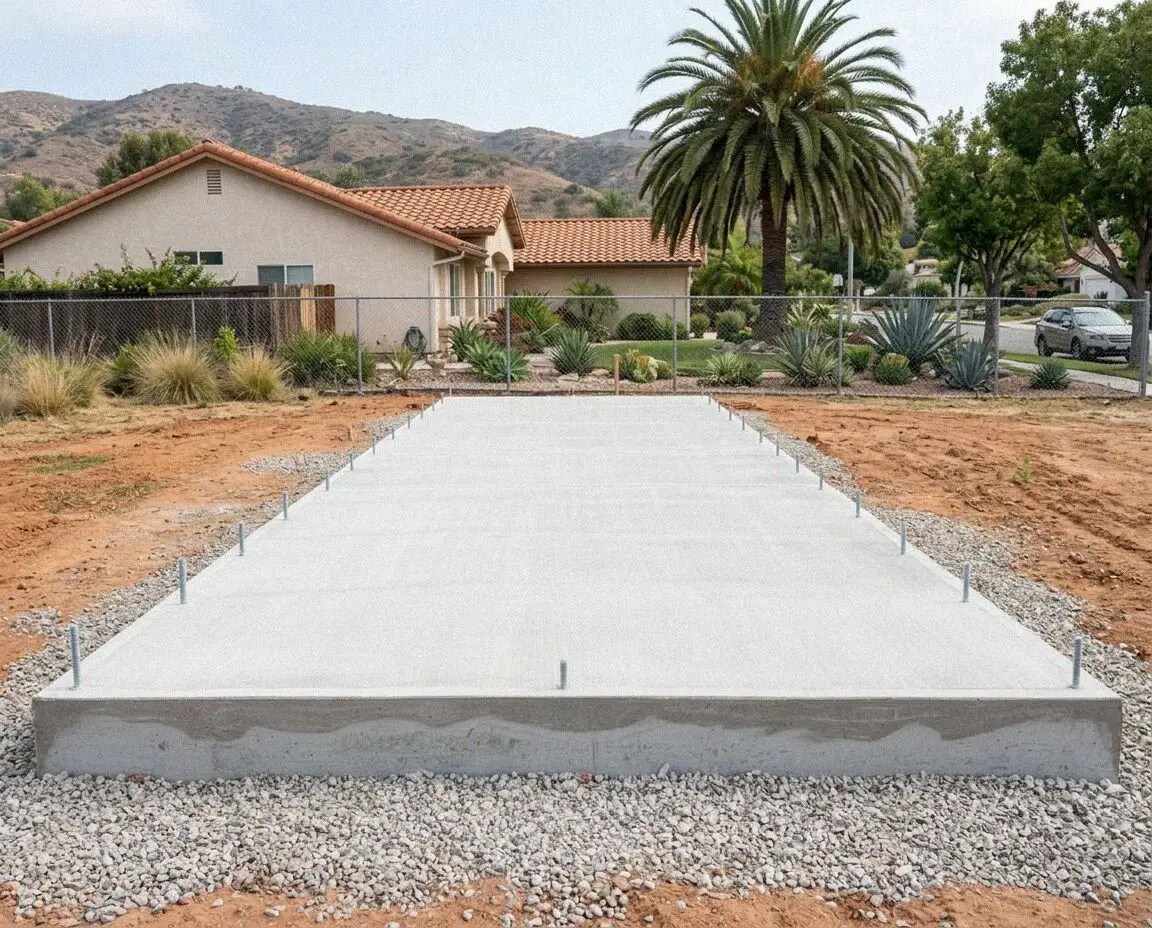
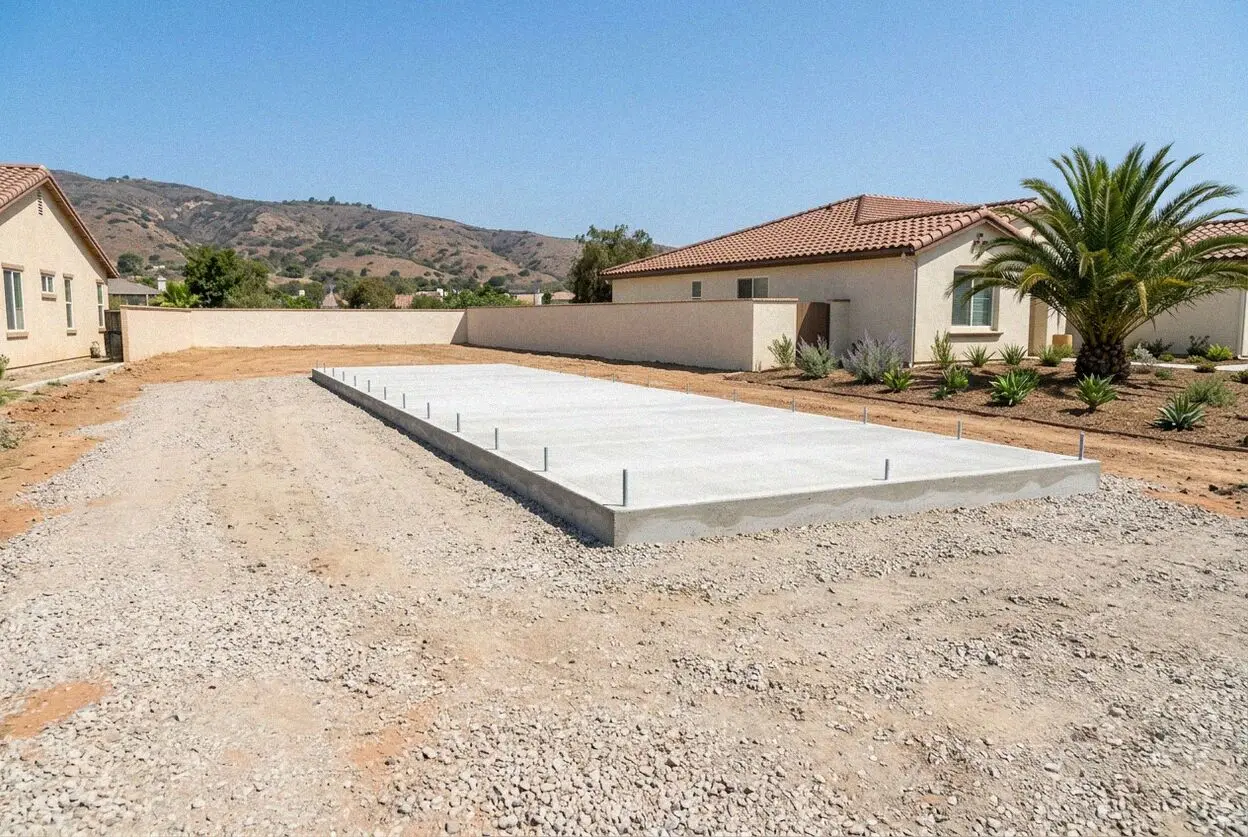
The slab an ADU or a converted garage stands on, poured with a footing under the walls, steel at mid-depth and a sheet beneath it all.
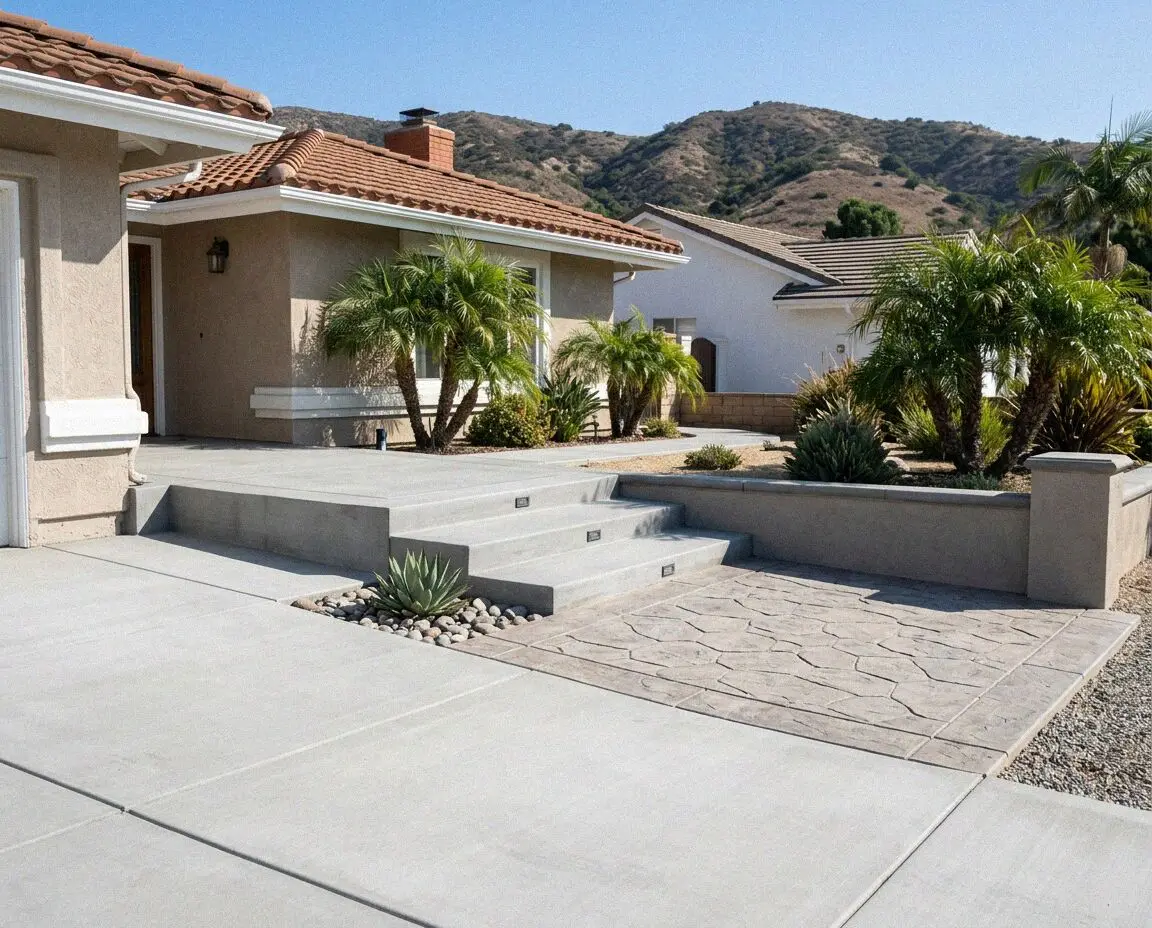
Footings and stem walls for an addition, a second story or a new home, laid out from the plans and the state's oil well record first.
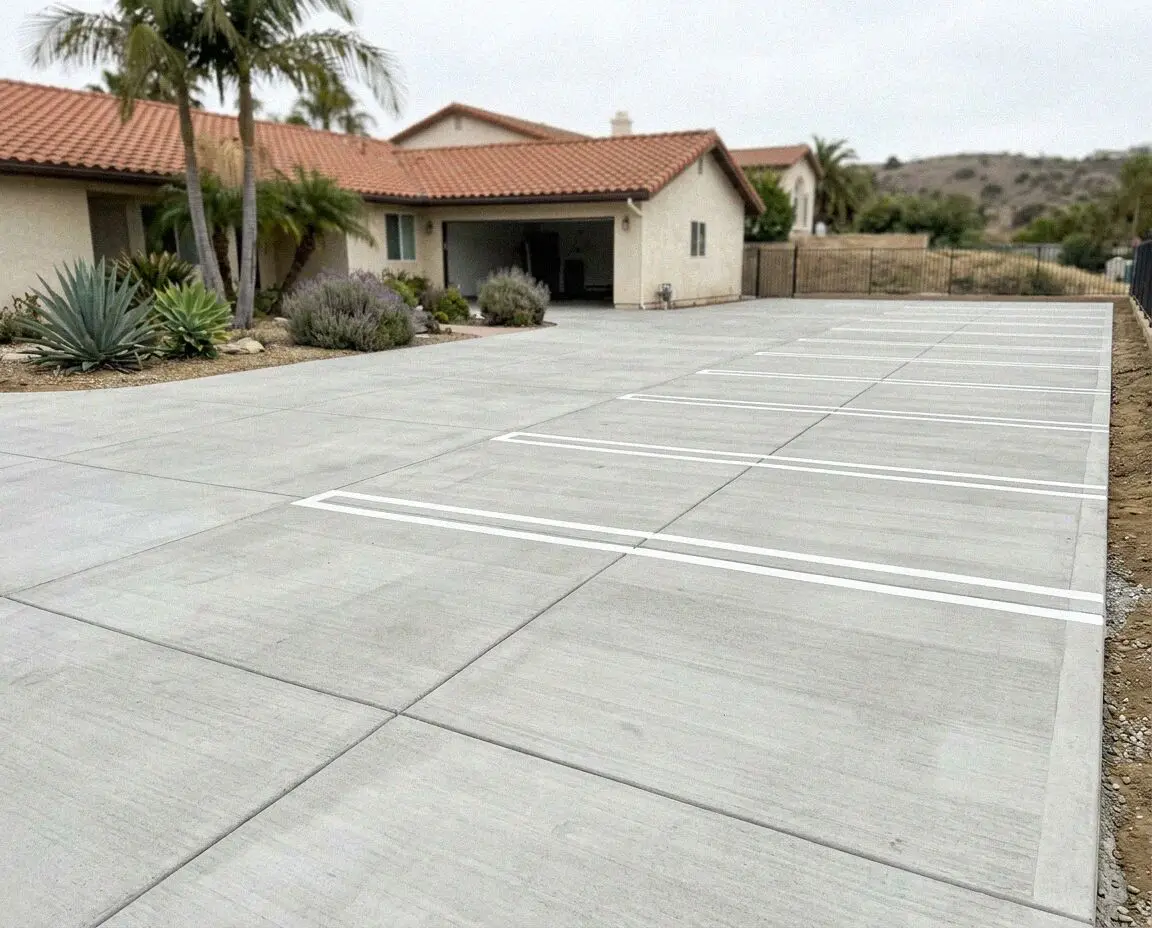
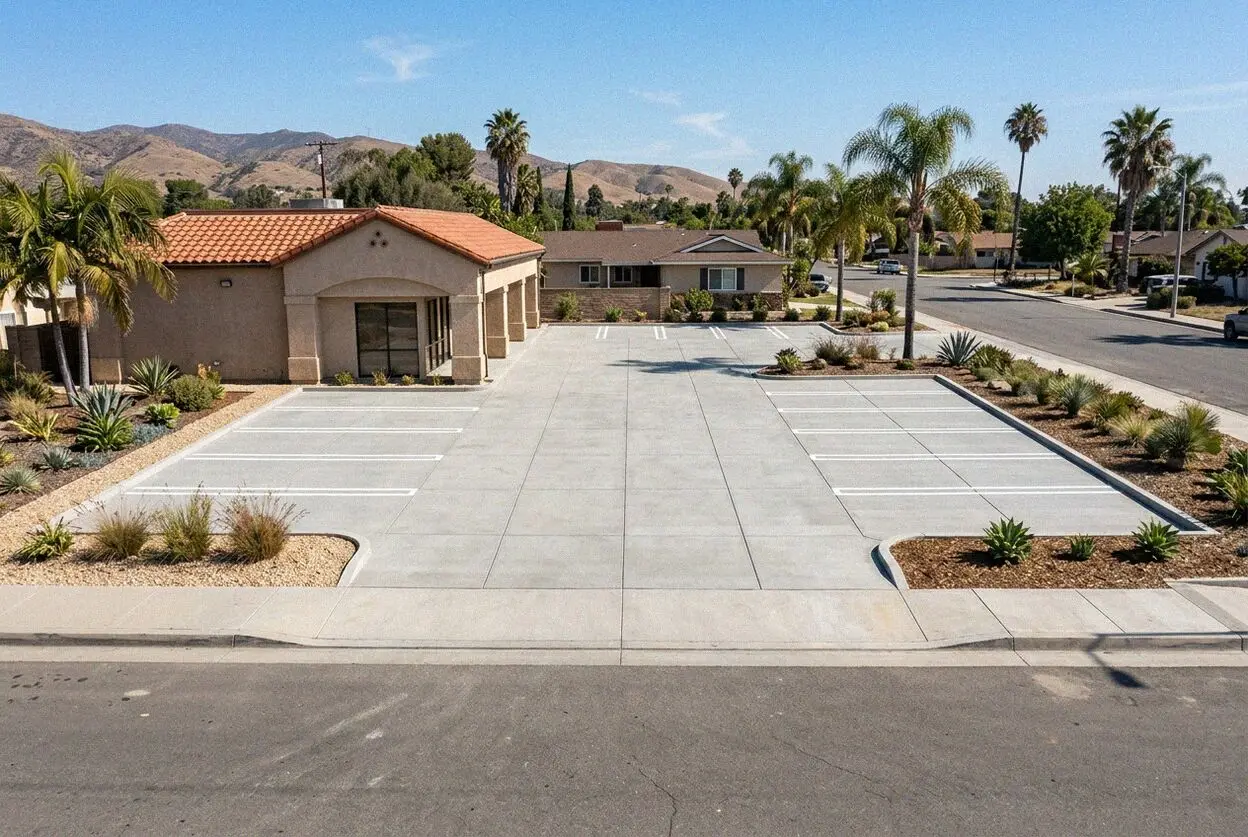
A lot poured for what runs on it, 6 inches on the aisle and 5 on the bays, with steel dowels through every joint the forklift crosses.
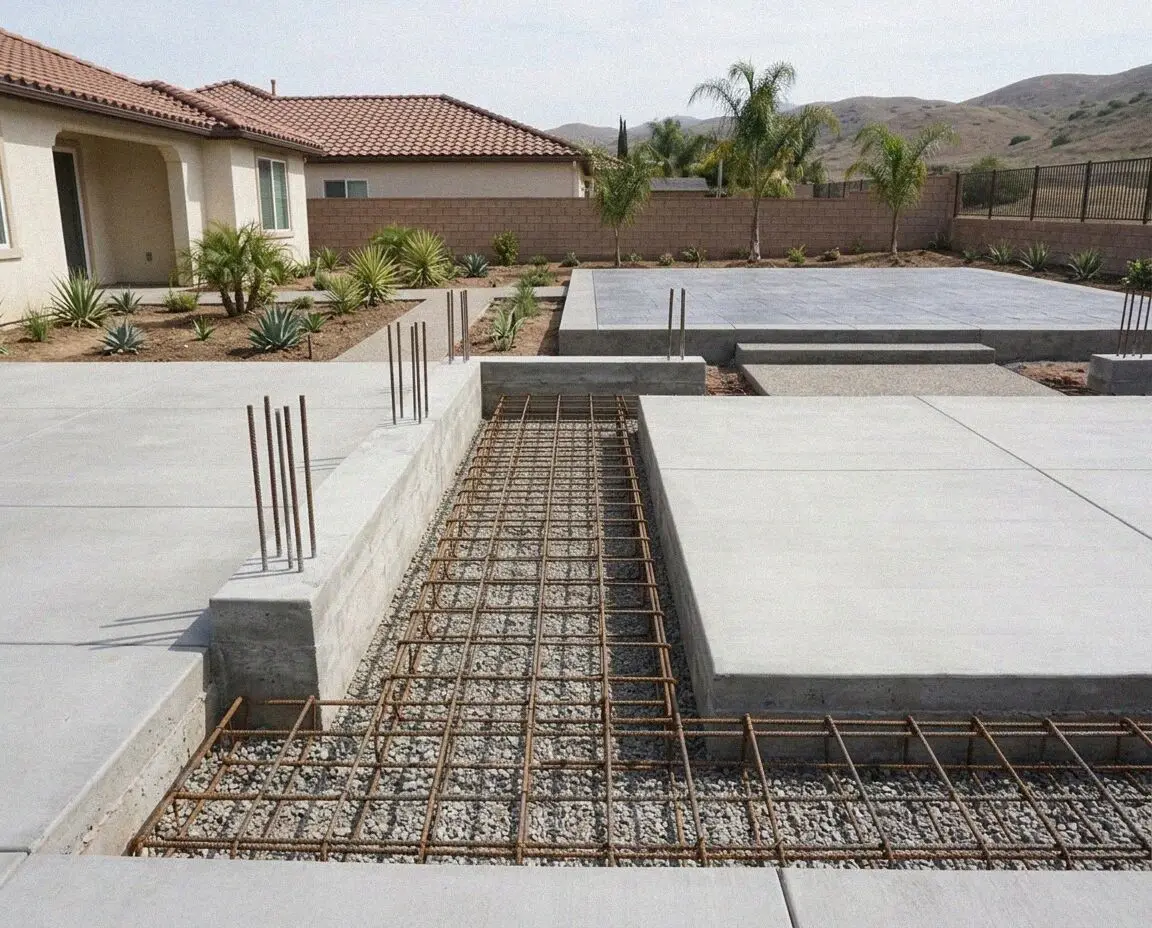
A footing dug to undisturbed ground and sized to the plans, doweled into the 1950s footing where a second story lands on it, seen open.
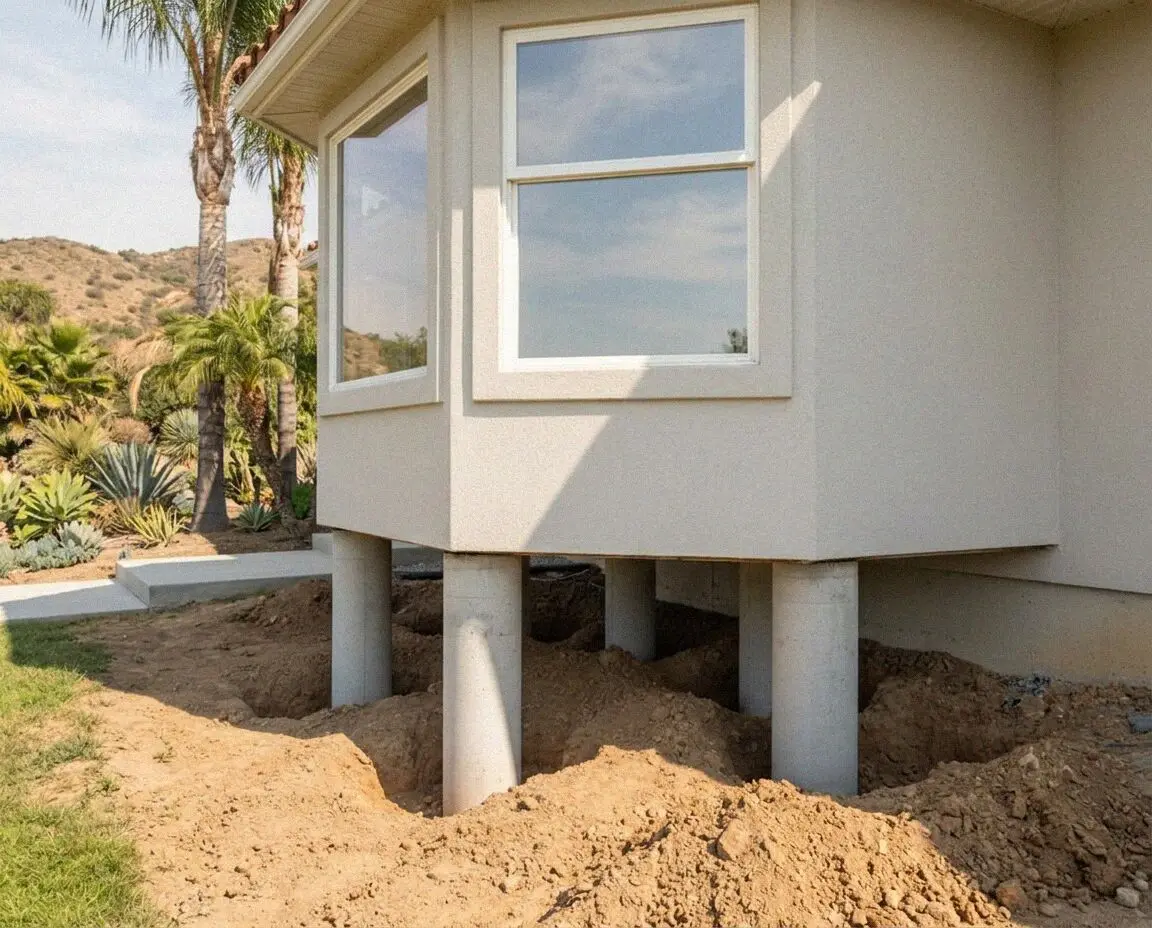
A settled house brought back to level, jacked from the crawl space or piered through the slab, with the leak that dropped it fixed first.
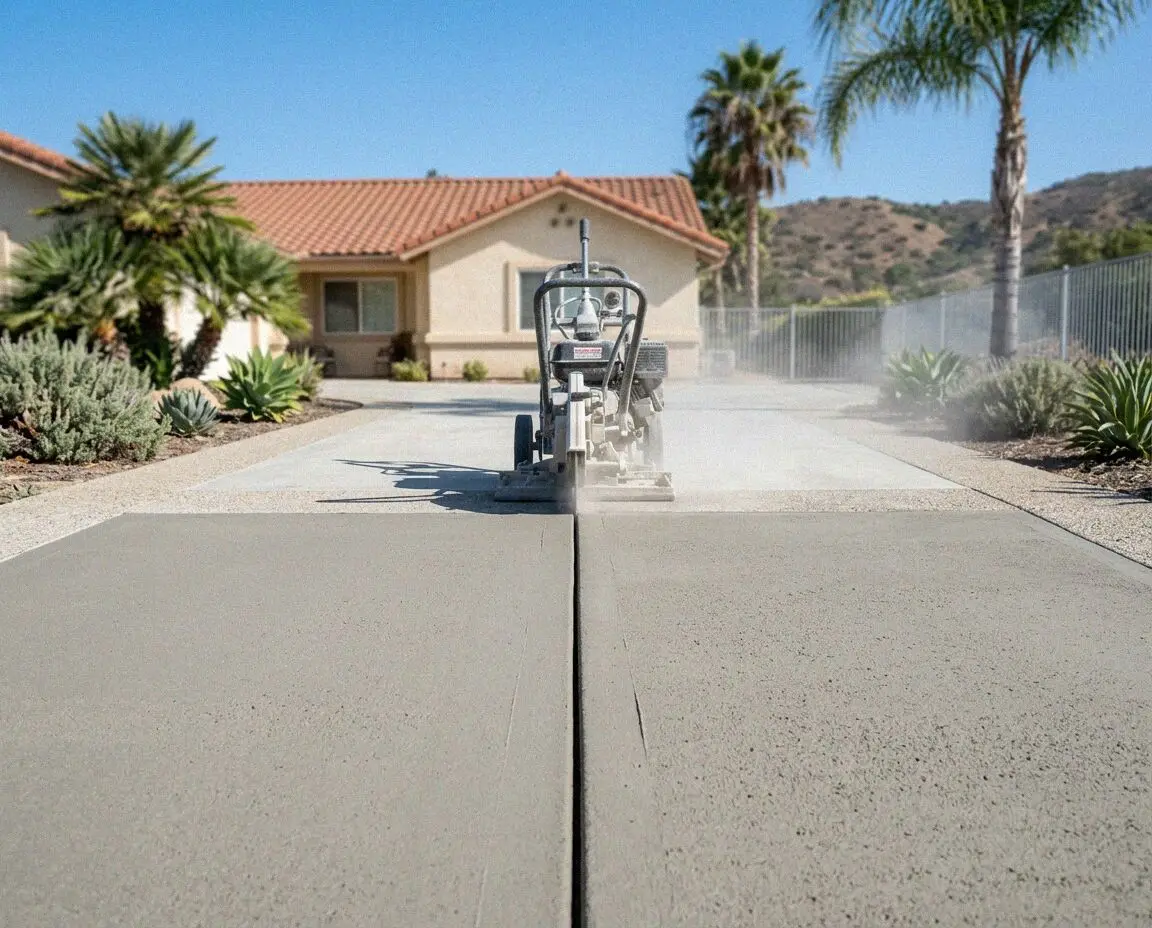
Drives widened, patios extended and trenches sawn for the lines to an ADU, each edge cut full depth and doweled so new concrete holds to old.
Four stages, each one closed before the next opens, and Kenji Okamoto on every one of them. Nothing is booked until the written estimate is in your hand and you have said yes.
You hear back within 1 business day with a day for the visit, inside the week, at no charge and with no obligation to go any further.
We measure, probe the ground, trace where the water runs and write the estimate at the property with every stage itemized.
With your approval we pull any permit, tear out, build and compact the base, tie the steel, then pour and finish in one visit.
We clean the site, then check the finished slab against the estimate with you, joint by joint, and close only when you are happy.
C-8 is the concrete classification of the California Contractors State License Board, and ours is active and checkable on the register. liability insurance on every job means one policy stands behind a driveway in Lomita, a garage slab in Carson and a wall in Rancho Palos Verdes.
The crew has worked from Hawthorne Boulevard since 2017, and Kenji Okamoto spent 19 years on South Bay crews before that. Sandy loam on the plain, clay on the Riviera slopes and 1950s aprons poured thin are what we open up before pricing, and the counter at City Hall is close by.
The estimate is written at your property after the work is measured, never over the phone. It lists the tear-out, the base, the steel, the pour, the finish and the haul-away on separate lines, and it is yours to keep, so two contractors can be compared on one job.
Each pour carries a written workmanship guarantee against defects in how it was built, and the terms are on your estimate. The claim we see most here is a crack that missed its joint, so joints are laid out before the pour and cut the same day. Wear and staining are not defects.
Something not covered here? (424) 484-9860 or send us a message.
What Customers Wrote
Reviews from across the South Bay, quoted as they were left on Google, Facebook and the BBB, each one about a different job and each one dated.
“The garage slab in our 1955 house had heaved and the door would not close. They broke it out in a morning, found no base under it, compacted 4 inches of rock, poured 440 square feet at 5 inches and troweled it smooth. The estimate was written in our driveway and the invoice matched it.”
“We built an ADU and Hawthorne Torrance Concrete did the slab. They set the forms to the plans, the City inspector passed the steel first time, and the pour went in before eight in the morning. 620 square feet, edges thickened to 12 inches, and the framers were on it a week later.”
“Our slope in the Riviera crept onto the patio every winter. They dug footings 30 inches into the clay, poured a 42-foot wall with weep holes and a drain behind it, and backfilled with gravel. Kenji Okamoto came back after the first rains to check it. Dry, straight, and it has not moved.”
About Hawthorne Torrance Concrete
Founded in 2017 by Kenji Okamoto, Hawthorne Torrance Concrete is a concrete contractor in Torrance, CA, working out of Hawthorne Boulevard and pouring across the South Bay and southern Los Angeles County for homeowners, landlords and small businesses.
Driveways, garage floors, slab foundations for additions and ADUs, patios and steps, on the flat tract lots of the plain and the slopes of the Riviera alike. Every job is covered by a written workmanship guarantee against defects in how it was built.
Kenji Okamoto holds the CSLB C-8 license with the California Contractors State License Board, the crew works under liability insurance on every job, and permits are filed by us wherever the job needs one. Every estimate is measured and written on site.
How We Pour
A driveway in North Torrance and a wall on the Riviera are built to one written specification. What changes with the ground is the depth of the base and the edge. What never changes is the compaction, the steel, the joints and the cure.
A garage slab in Southwood, an ADU foundation in North Torrance, a wall on the Riviera. Every one of them is on a street you can drive down, and we will tell you which street if you want to go and look.
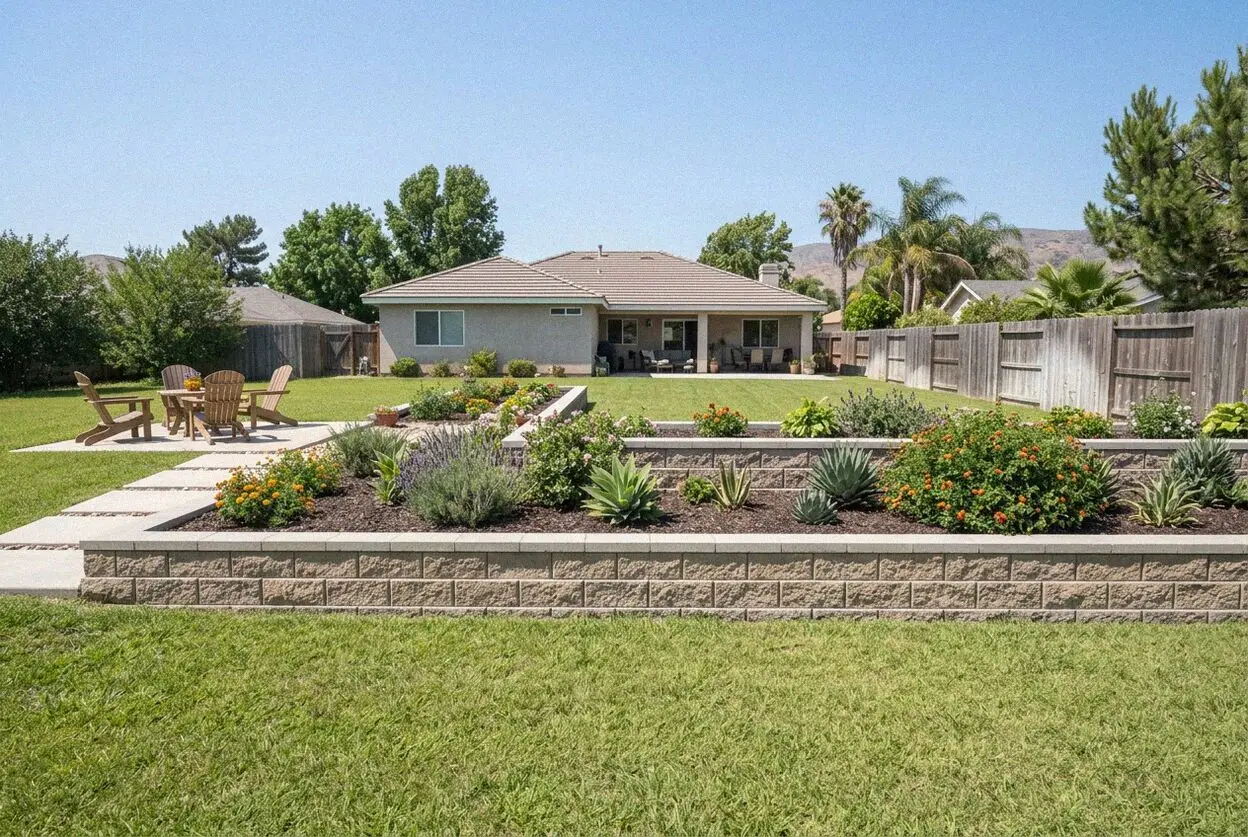
42 ft run at 4 ft high · Footings to 30 in

Kenji Okamoto put in 19 years on South Bay concrete crews, from foundation work to finishing, before founding Hawthorne Torrance Concrete in 2017. He holds the C-8 license and lives in Torrance. He measures each estimate himself and is at every pour, and the thing he does without fail is mark the joint layout on the forms before the truck arrives, so the cuts land where the slab wants to crack.
Local Knowledge
Postwar tract housing on a flat coastal plain, a hillside edge that moves, and a city that inspects its own permits. Three things we account for before a form is set anywhere in Torrance.
Torrance is a city of about 147,000 people on the South Bay plain, and the greater part of its housing went up between the late 1940s and the 1960s, when the fields around Old Torrance were built out for families working at the aerospace plants and the refinery. Those tracts in West, North and Southeast Torrance came with a single-car driveway, an apron at the street and a slab under a detached garage, most of them now past sixty years old.
Most of the city sits on sandy loam that compacts and drains well, which is why so many old slabs have lasted. The exception is the southwest, where the Hollywood Riviera and Walteria climb onto the Palos Verdes Hills and the ground turns to clay that swells in a wet winter and shrinks by autumn. On the plain we compact the subgrade and lay a gravel base. On the slopes we dig deeper, drain the base and thicken the edge, and the USDA Web Soil Survey shows which of the two your lot is.
Permits come from the City's Community Development Department at City Hall on Torrance Boulevard, and anything at the curb, the apron or the public walk also needs an encroachment permit from Public Works. We file them and meet the inspector, who checks the base, the thickness and the steel before the pour. The crew works the whole city, from the Olmsted streets of Old Torrance and the ranch houses of Southwood to the Riviera and the lots off Hawthorne, Sepulveda and Crenshaw.
On the flat sandy loam of the Torrance plain all three work, and the choice comes down to how long each lasts and what it asks of you afterward. On the Riviera slopes, where the ground swells, a jointed concrete slab is the one that stays put.
| Option | Service life | Ready for cars | What it needs | On our loam and the Riviera clay |
|---|---|---|---|---|
| Poured concrete | 30 to 40 years | 7 days after the pour | Reseal every 2 to 3 years | Rigid over the loam, with joints to take the clay movement uphill |
| Interlocking pavers | 25 to 50 years | The same day | Joint sand topped up every 1 to 2 years | Settle unevenly where the clay heaves, and weeds root in the joints |
| Hot-mix asphalt | 15 to 20 years | 2 to 3 days | Sealcoat every 2 to 3 years, cracks filled yearly | Ruts where the base stays wet in winter and softens on hot days |
Only the order can be given in money terms. Asphalt is the least to lay and the most to maintain, pavers are the reverse, and concrete is the middle of both lists.
Because heat is rarely the cause. Concrete shrinks as it cures whether the day is 70 degrees or 100, and a thin slab on a soft base with no joints cracks under the marine layer as surely as inland. The Portland Cement Association puts it down to base, thickness, joints and curing.
Sandy loam across most of the city, which drains and compacts well. It changes at the edge, where the Hollywood Riviera and Walteria climb the Palos Verdes Hills onto clay that swells when wet. We probe the ground before a driveway is priced and build the base to what we find.
Not for flatwork inside your lot line, which the California Residential Code exempts. The apron, the curb cut and the public walk need an encroachment permit from the City, and a slab for an ADU or a wall over 4 feet needs a building permit from Community Development. We file both.
It spreads the load and drains the underside. A slab poured on bare dirt bridges every soft spot and cracks where the ground gives, while crushed rock compacted in layers carries the load evenly and lets water out rather than holding it. It is where most failures start.
7 days for a car and 28 for anything heavier, when the concrete reaches its design strength. Feet are fine after 24 to 48 hours. Strength comes from cement reacting with water, so a slab that dries out early stops gaining it, which is why we keep the surface wet for the first week.
A single slab on grade, its edges thickened to carry the walls, instead of a stem wall over a crawl space. It suits the flat lots of North Torrance because there is nothing to step down. The soil report sets the thickness and the steel, and the City inspects before the pour.
What we get asked at the curb in Torrance, answered the way we answer it there: what moves the price, what is under the yard, how thick, how long, which permits and what the guarantee leaves out.
Thickness and tear-out move the estimate more than area does. A 1950s apron poured 3 inches thick on dirt comes out in a morning, but the base that goes back under it is where the money goes, and every inch added for a heavier vehicle is a quarter more concrete. We measure the job on a free visit and write the estimate at your door, because two driveways of the same size in Torrance are rarely the same job.
Yes. A line pump at the street reaches most Torrance back yards down the side of the house or over a low fence, and where a pump cannot be set we barrow the concrete through a gate as narrow as 36 inches. Pumping costs more per yard and barrowing costs more in labor, so access is priced on its own line after we have walked the route on the visit.
4 inches under cars and 5 inches where a pickup or a work van parks, and 6 if the garage doubles as a shop with a lift or heavy benches. Most of the original garage slabs in the postwar tracts here were poured at 3 inches or less on bare dirt, which is why so many have heaved and cracked, and why the thickness we pour is written on the estimate.
A compacted subgrade, then 4 inches of crushed rock compacted in layers, then reinforcing steel held up on chairs so it sits in the middle of the slab and not on the ground. The base carries the load and drains the underside, and the steel holds a crack closed if one forms. Leave either out and the slab bridges soft ground and breaks where the ground gives.
They are control joints, and they choose where the slab cracks. Concrete shrinks as it cures and cracks somewhere no matter what, so a groove a quarter of the depth, cut at 2 to 3 feet for every inch of thickness, gives the crack a straight line to follow where it will not be seen. We saw them the afternoon of the pour, because by the next day the slab may already have chosen its own line.
On the plain, yes. Most of the city sits on sandy loam that compacts and drains, and the old slabs that have failed there failed for want of a base, not because of the ground. The exception is the southwest, where the Riviera and Walteria climb the Palos Verdes Hills onto clay that swells in a wet winter, and there we dig deeper, drain the base and thicken the edges.
Any month but a wet one. Torrance seldom passes 90 degrees and the marine layer keeps mornings cool and damp, so the surface does not dry ahead of the cure the way it does inland, and there is no season to avoid for heat. A pour needs a dry day and a dry night, so a rainy week in January or February is the one thing that moves a date.
Yes, and 28 days after the pour is when. Unsealed concrete is porous, so oil from a parked car and water from the marine layer soak in and stain, and on the beach side of the city salt in the air reaches the steel through an unsealed surface. A penetrating sealer closes it, and a reseal every 2 to 3 years keeps it closed. Stamped and colored finishes get the same schedule.
Two to four working days on site, then the cure. Demolition and base take the first day or two, the pour and finish are one morning and the joints are sawn that afternoon. You can walk on it after 24 to 48 hours, park on it after 7 days, and anything heavier than a car waits 28 days for the slab to reach its full strength.
For flatwork inside your lot line, usually none, since the California Residential Code exempts driveways, patios and walks. The apron, the curb cut and the public sidewalk are right-of-way and take an encroachment permit from Public Works, and a slab under an ADU, or a retaining wall over 4 feet, takes a building permit from the City's Community Development Department. We file both and meet the inspector.
It covers defects in how the slab was built, meaning the base, the thickness, the steel and the joints, and its terms are printed on the estimate you sign. It does not cover wear, staining, damage from tree roots or ground movement beyond what the joints control, and a hairline crack inside a sawn joint is the joint working, not a defect. If the fault is in our build, we come back and repair it.
You call or send the form and hear back within 1 business day. The visit is booked inside the week and the estimate is written before we leave. Once approved, any permit goes in and the start date allows for the City's review. The crew is on site two to four working days, the walk-through is the day the joints are cut, and the driveway takes cars again after 7 days.
Service Area
The South Bay is where Kenji Okamoto learned the trade, and the towns below are the ones the crew is in most, from the beach cities to the flats along the Harbor Freeway. Find yours in the list, or call and we will say at once whether we cover you.
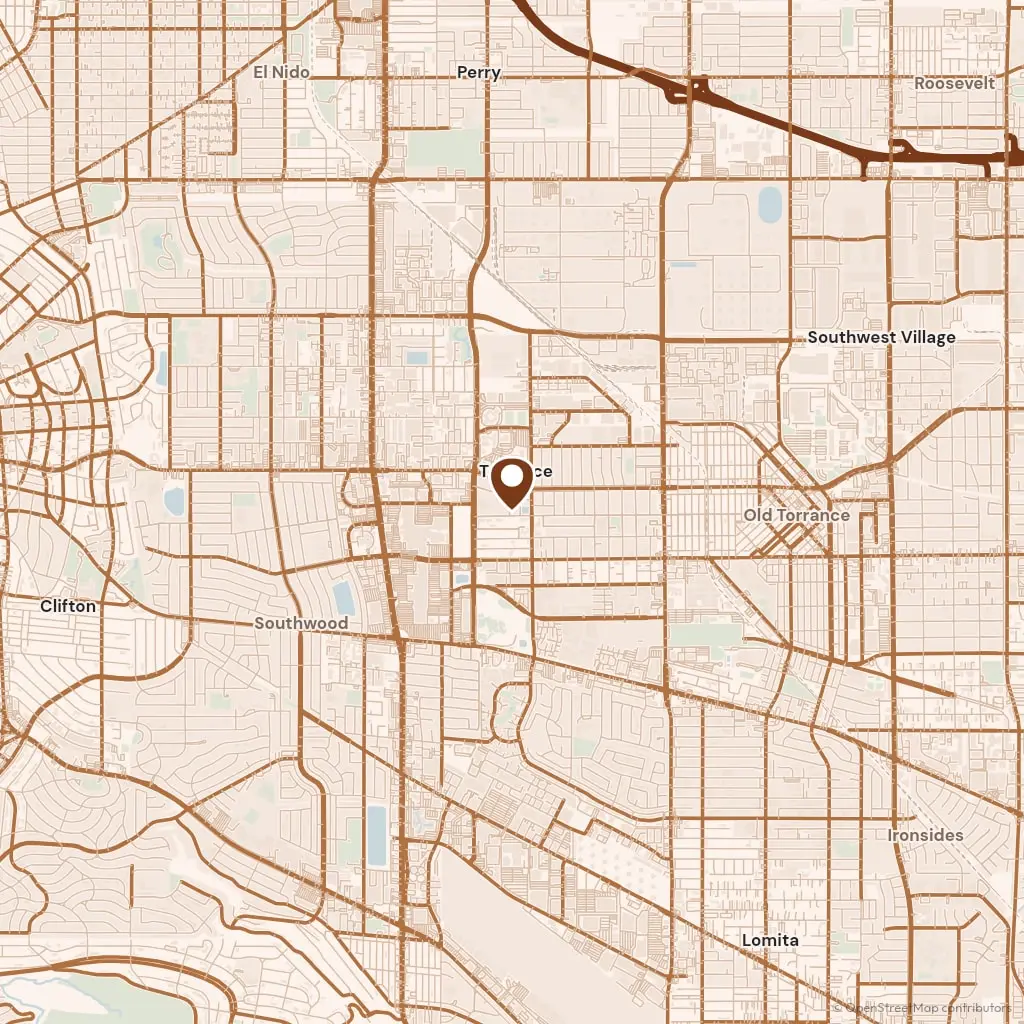 Open the Torrance Office in Google Maps
 Call or use the form and we reply within 1 business day with a day for the visit. Every estimate is measured and written on site, itemized line by line, and it is yours to keep. There is no fee for the visit and no obligation to book.