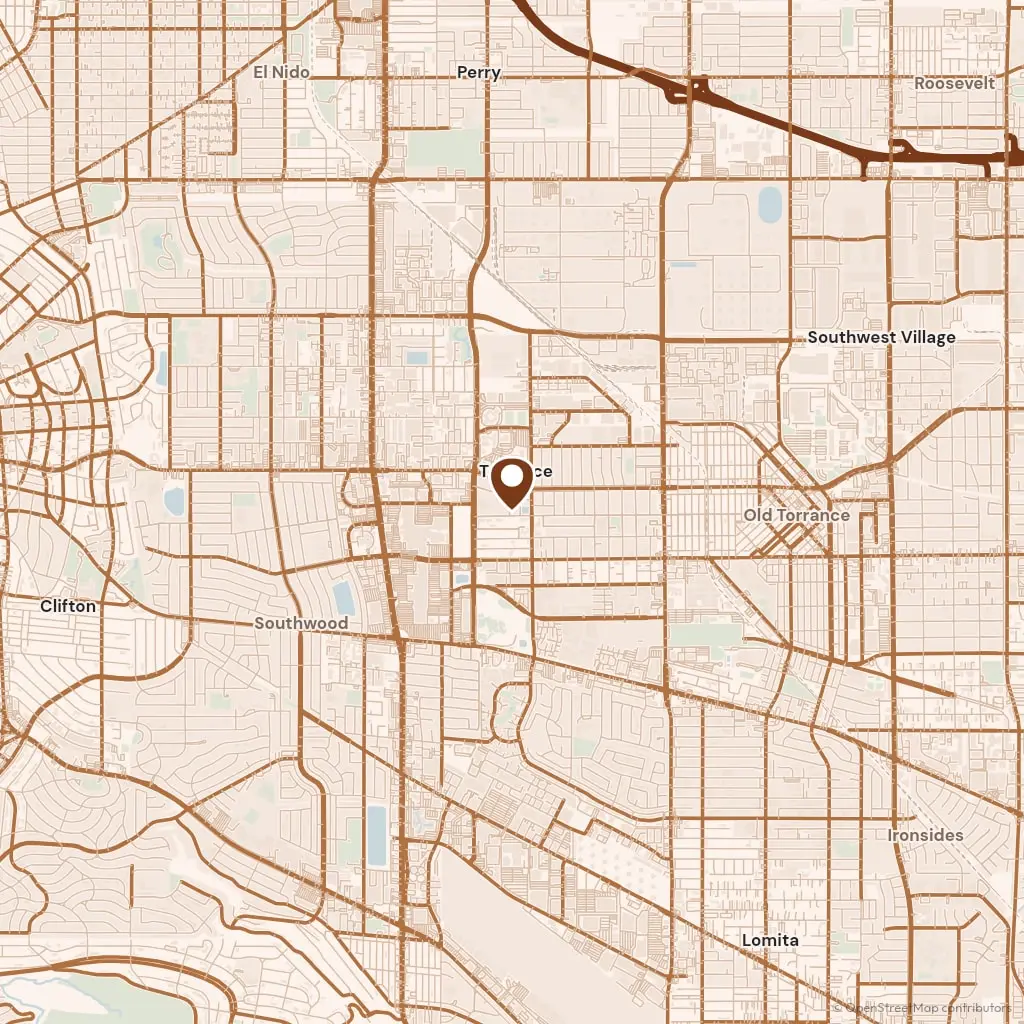
Our office is on Hawthorne Boulevard in Torrance and the drive is about 15 miles up the 405 to Culver Boulevard, or up Sepulveda when the freeway is stopped, so the crew leaves early and the concrete is ordered from a plant on the Westside rather than from the South Bay. Permits go to the City of Culver City's Building Safety Division at City Hall on Culver Boulevard, and anything at the curb or on the public walk is inspected before the pour. We file it and stand with the inspector.
The city grew up around the studio lot on Washington Boulevard, and the streets nearest it, in Carlson Park, Lucerne-Higuera and the blocks off Downtown, are 1920s and 1930s Spanish bungalows on lots of 40 to 50 feet with a driveway squeezed down one side. Sunkist Park and the streets toward Sepulveda came in the 1940s and 1950s, on wider lots with a garage at the back. Fox Hills is 1970s condominiums, where the work is a common walk or a pool deck for an association.
Ballona Creek is the thing to know about the flats. It crosses the city in a concrete channel on its way to the sea, and the ground either side is low, with water close beneath in a wet year, so a floor slab on those streets gets a vapor barrier without being asked. Culver Crest and Blair Hills are the opposite problem, dry clay on a slope that moves with the season, and the streets that climb off Jefferson Boulevard and Overland Avenue take a smaller truck than the flats do.